Get Full Government Meeting Transcripts, Videos, & Alerts Forever!
Get email alerts on the Public Safety topic
No spam. Unsubscribe anytime.
Commission opens review of electric-assisted vehicle rules amid complaints about speed and young riders
Summary
City staff and the police chief briefed commissioners on frequent complaints about electric scooters, e-bikes and off-road electric "dirt" bikes; options discussed included age restrictions, speed-based classifications, registration/tags, helmet requirements and targeted Main Street bans. Commissioners asked staff to run a community survey and return with draft text for possible ordinance changes.
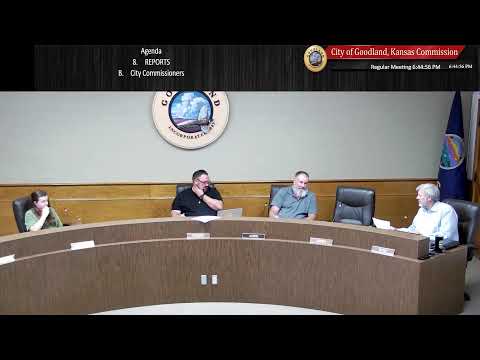
City staff and the police chief told the Goodland City Commission on July 13 that complaints about electric-assisted mobility devices — from small scooters to powerful electric dirt bikes — have increased and that current local and state rules have not kept pace with new device capabilities.
Police Chief Earhart (as introduced by staff) and other staff explained that devices vary widely in speed and function: some e-scooters can reach high speeds and certain electric dirt bikes are not designed for city streets. Staff presented several regulatory options: broad bans of certain device classes, speed-based limits tied to licensing or age (for example, requiring a driver's license for devices capable of >25 mph), registration or tagging to enable enforcement, helmet and equipment requirements, time/place restrictions on Main Street, and targeted enforcement supported by grant-funded police e-bikes. The chief noted enforcement challenges: by the time officers respond to complaints the devices are often gone, and citation strategies depend on having an applicable code classification.
Commissioners discussed trade-offs between allowing children to play and preventing dangerous behavior. Several commissioners favored starting with limited, enforceable rules (for example, age minimums) and gathering community input via a survey rather than immediate ordinance changes. Staff suggested a survey that could capture residency and aggregate analytics; Police indicated they would deploy two grant-funded e-bikes for enforcement patrols. The commission directed staff to draft survey language and begin community outreach; no ordinance change was adopted at the meeting.
Next steps: staff to prepare a community survey and draft code language options for future deliberation; police will deploy grant-funded e-bikes to enhance enforcement while the policy is developed.