Get Full Government Meeting Transcripts, Videos, & Alerts Forever!
Get email alerts on the Parks Budget topic
No spam. Unsubscribe anytime.
Pleasanton parks division details operational impacts after $645,000 budget cut
Summary
Parks Manager Giacomo DeMonte told the Parks and Recreation Commission that a $645,000 reduction in the division’s FY2025–26 budget eliminated several maintenance contracts and cut 1.0 FTE, shifting routine mowing, edging and trash pickup to city crews and increasing maintenance hours and equipment wear.
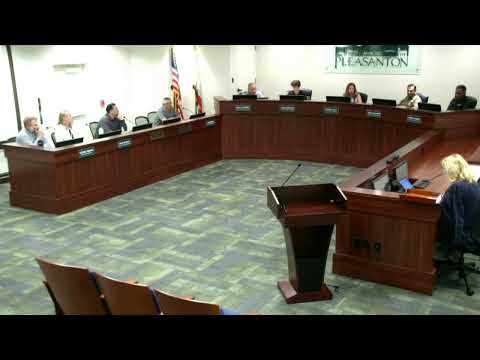
Parks Manager Giacomo DeMonte told the Pleasanton Parks and Recreation Commission on June 11 that the parks division budget was reduced by $645,000 in fiscal year 2025–26, with the reductions split between contractor services and staffing. “Contract services basically help to close a gap between the maintenance that needs to be done and the staffing that we have available,” DeMonte said.
DeMonte said several contract services were cut or reduced. The mowing-and-edging contract that covered 30 fixed sites and roughly 71 acres was eliminated and its weekly work was shifted to city crews. The parks’ trash collection contract — which covered about 766 cans across the park and trail system — was also discontinued and the emptying duties moved in‑house. DeMonte said the city also ended a median‑mulching contract that had been applied to roughly a third of the median inventory.
On staffing, DeMonte said the division lost one full‑time equivalent position and about 1,870 labor hours for the year, reducing routine maintenance capacity. “That staff time is taken away from routine maintenance and enhancement projects, and it also offsets what could have helped offset the loss of some of these contracts,” he said.
Commissioners pressed staff on operational effects. DeMonte cited data showing staff spent almost 1,400 hours emptying park trash cans from January–April 2026 compared with about 76 hours in the same period in 2025. He also said planter maintenance and weed control hours each dropped by about 400 hours. He warned increased mower run time will accelerate preventive maintenance needs and replacement cycles.
DeMonte described an emerging mulch issue: with the median mulching contract ended, the city’s chip mulch stockpile is growing because crews have less capacity to apply material to medians and other sites. He said staff are discussing controlled outlets — for example, the Bernal compost hub — but do not want to create an unmanaged drop‑off site.
DeMonte said public‑safety and high‑priority services such as tree maintenance and vegetation management were preserved where possible. He recommended prioritizing programmed sports fields and conserving water for high‑use sites; lower‑use neighborhood parks may move to less‑frequent mowing.
The commission did not take a policy vote on the budget reduction but discussed options including going back out to bid for some contracts, monitoring the Ken Mercer Sports Park turf project as a potential mulch outlet and exploring technologies such as autonomous mowers in the longer term.
The commission asked staff to keep monitoring service‑level impacts and return with options as part of future budget and contract discussions.