Get Full Government Meeting Transcripts, Videos, & Alerts Forever!
Get email alerts on the Dmv Points topic
No spam. Unsubscribe anytime.
New York drivers face easier suspensions after DMV lowers point threshold and extends lookback window
Summary
Traffic attorney Kimberly Ujak told BronxNet that a recent DMV administrative change reduced the suspension threshold from 11 to 10 points and lengthened the lookback period from 18 to 24 months, increasing the odds drivers will accumulate suspension-triggering points; she urged drivers to document stops and contest violations in adjudication.
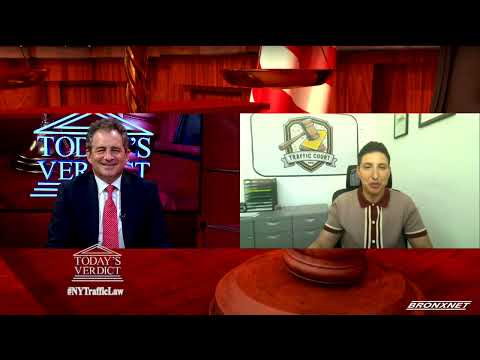
David Lesh, host and trial attorney, and traffic attorney Kimberly Ujak discussed recent New York DMV changes and what they mean for motorists.
The DMV has internally adjusted how it counts point-based driving infractions, Ujak said. "It was originally 11. Now it's 10," she said, and the agency lengthened the lookback period "from 18 months to 24 months from the day you received the violation," making it easier for successive violations to add up to a suspension.
Why it matters: Points are recorded on both a driver's DMV record and by insurers, Ujak said, which can lead to higher premiums and, for professional drivers such as taxi operators, different calculations that can result in suspensions or revocations. "The points are the big thing," she said, adding that many clients pay fines to avoid points because insurance and commercial-license consequences can be severe.
How enforcement is changing: Ujak described an observable uptick in moving-violation summonses and a stronger police presence on major highways and in the city, citing I-495 and I-87 as examples. She said speeding and electronic-device violations are the most frequently written summonses, while enforcement priorities can "ebb and flow" after high-profile crashes, including pushes on red-light violations or failure-to-yield to pedestrians.
What drivers can do: Ujak recommended gathering contemporaneous evidence—photographs taken at the time of the stop, third-party witness testimony (ideally an unrelated passenger), and emergency documentation where applicable—rather than relying on older Google Maps images, which adjudicators may view as stale. She also detailed courtroom differences: New York City traffic adjudication operates in a DMV administrative tribunal with limited plea-bargaining, she said, so points can attach automatically if an administrative law judge finds a violation. Outside the city, plea negotiation is more common.
On technology and roadside behavior: The guests discussed GPS apps and detector devices. Ujak said GPS services such as Google Maps and Waze commonly alert users to nearby police presence; radar detectors are generally tolerated, while jammers are illegal and LIDAR devices occupy a gray area depending on the product. Her practical advice for stops: be polite, provide license and registration, avoid escalation, accept the summons if issued and contest it later in court rather than arguing at the roadside.
Next steps: Ujak advised drivers concerned about points and suspensions to consult counsel and to preserve contemporaneous evidence of any stop. Lesh closed the segment by thanking Ujak and sending viewers to BronxNet for more resources.