Get Full Government Meeting Transcripts, Videos, & Alerts Forever!
Get email alerts on the Land Use Variance topic
No spam. Unsubscribe anytime.
Oradell zoning board approves Mendoza family's front‑yard basketball court with conditions
Summary
The Oradell Zoning Board of Adjustment unanimously approved a variance June 15 allowing a private, removable permeable basketball court at 404 Demarest Ave, subject to limits including no lighting or concrete, maintenance of screening, engineered review of materials and removal upon sale.
The Oradell Zoning Board of Adjustment voted June 15 to grant the Mendoza family a variance to keep a privately used, at‑grade basketball court on the Demarest Avenue frontage of their corner lot at 404 Demarest Ave.
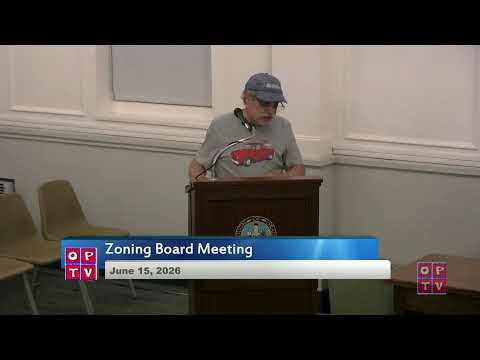
Daniel Mendoza, the property owner, told the board the court measures about 25 feet 6 inches by 20 feet 6 inches and is made of interlocking permeable tiles over landscaping fabric and compacted gravel; he emphasized it is removable, screened by existing shrubs, and intended for private family recreation only. "The court is permeable, removable, and is not a building mass," Mendoza said during his presentation.
Board members questioned whether the modular tiles or the anchored basketball hoop constituted a "permanent structure" under the borough's zoning code. Counsel noted the town prohibits accessory structures in front yards (citing a zoning provision discussed in the hearing), and several board members said the hoop—anchored in concrete and bolted—was the principal element that required variance relief.
Members also weighed broader precedent concerns. One committee member said the board should approve the variance rather than rule the materials permissible without review, to avoid signaling that front‑yard patios or similar installations would be allowed without a formal process. Another member noted that the court was well screened and not readily visible from the street.
Neighbors who testified in support said they had not experienced noise or nuisance from the installation and described the court as a quiet neighborhood amenity. "I didn't notice the structure until we were called over," said Russell Jones, a nearby resident, adding that his children enjoy playing with the Mendoza children. John Obrashkin, another neighbor, said screening makes the court effectively invisible from his windows.
At least one commenter raised environmental and health questions about the material. Paul Lasounas asked whether the tiles were plastic and expressed concern about microplastics and PFAS; Mendoza replied the product is UV‑resistant and described it as non‑toxic, and the board required additional material information as a condition.
The board approved the application (filed as application 897‑26) on a motion that included the following conditions: limited location and dimensions consistent with the submitted survey; private family use only; no expansion beyond the approved footprint; maintenance and replacement of screening if needed; maintenance of the permeable modular surface and gravel base; no asphalt or concrete unless separately approved; no lighting on the court; and removal of the installation upon a change in property ownership. The board also directed that manufacturer and material details be provided to the borough engineer for review and that the applicant comply with any safety or drainage directives from that review.
The vote was unanimous among members present (Bartlett was absent). Chair read the standard 45‑day notice period on potential objections after memorialization of the resolution.
What happens next: the board's resolution will be memorialized in a written document reflecting the motion and conditions; the town engineer will review the material specification provided by the applicant and may require compliance actions if concerns are identified.