Get Full Government Meeting Transcripts, Videos, & Alerts Forever!
Get email alerts on the Energy Reliability topic
No spam. Unsubscribe anytime.
Consumers Energy tells Albion officials trees, grid upgrades and data centers factor into reliability and rates
Summary
A Consumers Energy manager described storm-driven outages, tree trimming and infrastructure investments, outlined state clean-energy goals, and promoted assistance programs and local initiatives such as an Albion tool hub and workforce opportunities associated with potential data‑center load.
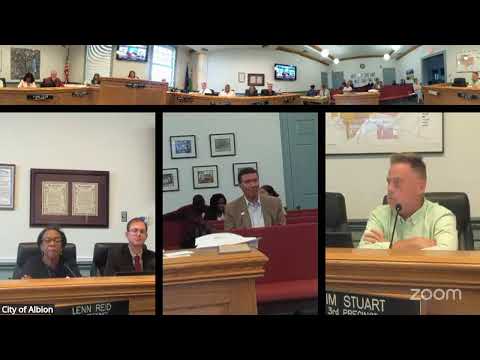
Greg Morgan, an affairs manager with Consumers Energy, briefed the council on reliability work, storm impacts and local investments. He framed safety as a top priority, described recent extreme weather and tornado activity, and said the utility has increased tree trimming and system hardening to reduce outages.
Morgan said the company is working on infrastructure upgrades, including reclosers and automatic-transfer equipment, to restore power faster. He noted that a substantial portion of utility spending goes back into the grid: "75¢ of every dollar we are pledging to you is going straight into the grid," he said, and described local investments in Calhoun County and operations at the Albion tool hub.
On energy policy, Morgan discussed the company’s integrated-resource or 'clean energy' plan and referenced recent state law that shifts renewable targets (he cited an 80% renewable target and a broader 100% clean goal by 2040). He also addressed affordability, saying that while Michigan’s rates are relatively high on a per‑kilowatt basis, the state’s bills can be lower because of lower usage patterns compared with hotter states.
Morgan described programs to lower customer costs, including home efficiency audits, weatherization and a helping‑neighbors program targeted to households with serious payment difficulties. He urged residents to use available rebates and programs and promoted a short customer survey the company is circulating.
On economic development, Morgan discussed data centers as a possible source of large new electric load that could improve affordability by spreading fixed costs; he said regulatory safeguards require data‑center developers to pay their share of infrastructure upgrades and to commit to minimum capacity payments.
Ending: Morgan encouraged feedback from residents, offered to host local outreach on programs, and left printed materials for the council. No council action was required; the presentation served as information for planning and community outreach.