Get Full Government Meeting Transcripts, Videos, & Alerts Forever!
Get email alerts on the Pud Approval topic
No spam. Unsubscribe anytime.
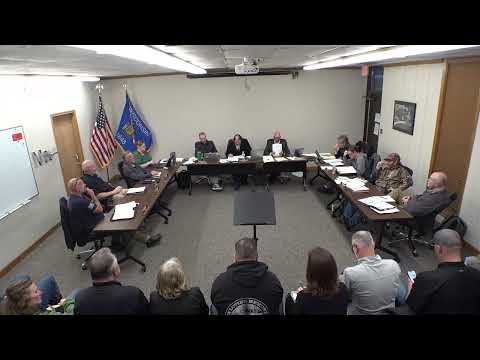
Village approves PUD overlay for 150-acre Bridal Athletic Complex after lengthy public comment
Summary
Big Bend village board voted to create a Planned Unit Development (PUD) overlay and direct staff to prepare a recorded general development plan for the Bridal Athletic Complex (150.49 acres at 6465 Big Bend Drive) while attaching 11 conditions including phase-by-phase CUP reviews and limits on building and lighting heights.
The Village Board voted to establish a Planned Unit Development (PUD) overlay and to direct staff to prepare a general development plan for the 150.49-acre Bridal Athletic Complex at 6465 Big Bend Drive.
The motion, made by Greg and seconded by Kelly, accepted the planning commission recommendation and the village planner’s conditions as the controlling framework for future phased development. The PUD approval does not change the site’s underlying B4 (Highway Business/Industrial Flex) zoning; it provides dimensional flexibility and a master plan that will guide later conditional use permits (CUPs) and site plans.
Why it matters: The PUD creates a recorded framework that will govern multiple future phases — including athletic fields, potential hotel space and lighting towers — but does not itself authorize construction. The board attached 11 conditions that require phased CUPs, adherence to stormwater and drainage standards, performance lighting metrics, and the recording of development documents so requirements “run with the land.”
Staff and consultant presentations emphasized the six statutory findings the board must consider under the code (drainage, road access, public services, street adequacy, utilities, and permanent open space preservation). Planner materials cited a memo from village planner Ben Greenberg and an applicant narrative (ISG, 12/23/2025) as the principal evidentiary exhibits for those findings.
Key conditions and limits outlined by the board include: • A recorded general development plan and development agreement to be filed with county records. • Phased approvals: each phase must return for CUP and site-plan review with detailed studies addressing access, traffic, parking, noise, utilities, lighting and stormwater. • Maximum heights established as part of the PUD: indoor sports facility 70 feet, hotel 45 feet, athletic field lighting towers 85 feet; the board reserved authority to set lower heights at CUP review to protect compatibility. • Minor deviations may be approved during phased review; major changes (including any increase in the maximum heights or introduction of principal land uses not contemplated by the plan) will require formal amendment with public hearing. • The PUD will expire if the developer fails to commence a phase within five years of the effective date.
On evidence and infrastructure: Staff noted stormwater for phase 1 will be reviewed by village staff and the Wisconsin DNR; porous pavement and underdrains were proposed in the stormwater plan for the initial phase. The village does not currently have borrowing capacity to pay for large utility extensions; staff estimated roughly $8 million to extend water to the interchange area and an additional about $12 million to bring municipal sewer and water to the subject property in later phases, and said the expectation is that the developer would fund such extensions when required.
Public reaction: Dozens of residents urged the board to pause or deny approvals, citing concerns about lighting intrusions, lower property values, traffic and safety, and perceived long-term costs to the community. Staff and the board repeatedly noted that the PUD itself sets a framework and that each phase will require further public review and permits before any land-altering activity or construction occurs.
What’s next: The PUD approval sets the procedural framework. Any construction or phase-specific uses will require subsequent CUPs and permits; the board and staff said the village will require compliance with DNR permits, WisDOT/roadway improvements where necessary, and site-specific stormwater and traffic studies prior to approving those later phases.