Get Full Government Meeting Transcripts, Videos, & Alerts Forever!
Get email alerts on the Sports Complex topic
No spam. Unsubscribe anytime.
Planning commission defers decision on proposed BREC sports complex after hours of public comment
Summary
The Village of Big Bend planning commission opened a public hearing on a conditional-use permit for phase 1 of the proposed BREC athletic complex, heard hours of largely critical public comment about traffic, lighting, drainage and fiscal risk, and voted to defer the matter while staff collects outstanding agency reviews and technical studies.
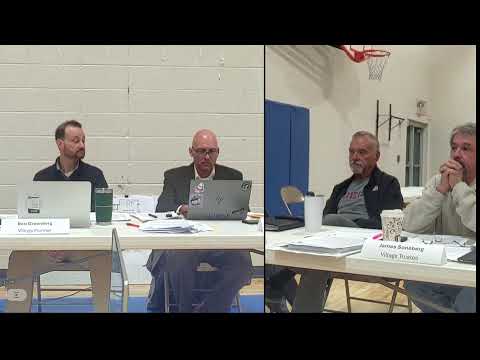
The Village of Big Bend planning commission on Jan. 29 opened a public hearing on a conditional-use permit for phase 1 of the proposed BREC athletic complex and, after more than two hours of public comment and commissioner discussion, voted to defer action so staff can gather outstanding studies and state reviews.
Ben, the village planner, told the commission that the application covers four outdoor soccer fields, parking areas, internal access roads, lighting and related seasonal operations and that the Dec. 29 hearing produced more than 60 speakers and extensive written comment. He said the developer has delineated wetlands, the Department of Natural Resources will require site screenings and the state will require a traffic-impact analysis before final approvals. "We expect a traffic impact analysis and additional agency reviews," Ben said, adding that the PUD would set maximum parameters and that subsequent phases would require separate conditional-use applications.
Residents who live near the proposed site urged the commission to wait for more information. ‘‘I feel that this is being pushed through,’’ said Jim Sica, a nearby resident, adding that lights and noise would fall on neighbors while later phases could bring larger changes. Jason Dearing, who said he lives about 300 feet from the property, questioned whether the village would enforce permit limits for light poles and setbacks and asked, "Is this the village of Big Bend or the village of Rec? Demand transparency." Several speakers cited concerns about narrow local roads, culverts, gravel driveways, and the risk that the village would pay for sewer and water upgrades.
Speakers also criticized the project's photometric data and lighting design. One participant claiming electrical experience said the photometric study understates glare for viewers elevated above the property and noted a staff document that describes 36 fixtures producing very high lumen output; that speaker urged independent review of the lighting study and berm effectiveness. Environmental concerns were raised as well: residents cited wetland and floodplain delineations and noted an endangered species (the rusty patched bumblebee) and the need for DNR review before any grading.
Not all comments opposed the project. An attendee identified only as Erica said she had reviewed documents posted online and urged the commission to rely on the "objective findings and professional analysis contained within the studies" and to separate fact-based review from rhetoric. A smaller number of speakers supported the complex as a potential economic opportunity and source of local jobs.
After public comment, commissioners debated options including tabling rezoning for later phases and seeking additional information specific to phase 1. Committee member (speaker 27) moved to defer the planning commission's recommendation; committee member (speaker 7) seconded. The motion carried by voice vote and the item was deferred. Staff was directed to return with the outstanding traffic, photometric and DNR-related materials and any other studies necessary to make the substantial-evidence findings the statute requires.
The planning commission emphasized that approval of a planned-unit development establishes only zoning parameters and does not authorize construction; each phase will require subsequent site-plan conditional-use approvals. The commission set no new hearing date; staff will schedule the matter once the required studies and agency responses are available.