Get Full Government Meeting Transcripts, Videos, & Alerts Forever!
Get email alerts on the Executive Session topic
No spam. Unsubscribe anytime.
Bolivar aldermen allow two remote members to join and move into closed session under RSMo 610.021
Summary
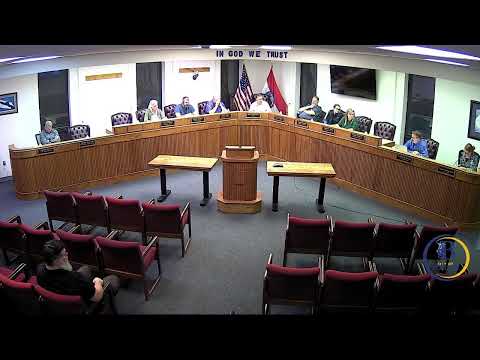
In a Feb. 28 special session, the Bolivar Board of Aldermen voted to permit two absent members to participate via Zoom and then approved a motion to enter closed (executive) session citing RSMo 610.021 for legal and personnel matters.
The Bolivar Board of Aldermen voted Feb. 28 to allow two absent members to participate in the meeting via Zoom and then approved a motion to enter closed session under RSMo 610.021 to discuss legal actions and personnel matters.
The meeting opened with a roll call and confirmation that six members were present in person. After adopting the agenda by voice vote, a member moved “we go into closed session pursuant to RSMO 6 10 dot 0 2 1, sub paragraph 1, legal actions, cause of action, or litigation involving a public governmental body in any confidential or privileged communications between a public government representatives and its attorney and RSMO 6 10 dot 0 2 1 sub paragraph 3, hiring, firing, disciplining, or promoting a particular employees by a public governmental body when personal information about the employee is discussed or recorded.” The motion was seconded; members then debated procedural sequencing for voting on remote participation and the closed-session motion.
Board members agreed to vote first on whether remote members could participate. A member moved to allow “the 2 members that aren't here in person to attend executive via Zoom.” That motion was seconded and decided by voice vote. The chair recorded the result as five ayes and one no.
One member spoke against routinely allowing remote votes: “I never vote for somebody to be on Zoom unless I think unless they're an attorney to be on Zoom unless they're here in person,” saying they would vote nay on remote participation except in limited circumstances.
After that decision the board voted to untable the earlier closed-session motion and proceeded to a roll-call vote. The clerk called the roll; members responded in the affirmative and the chair announced the motion had carried and the board was entering closed session.
The statutory citations referenced on the record match RSMo 610.021, which the board said supported using executive session to discuss litigation and certain employee matters. The meeting then transitioned into closed session; the public record ended as the board initiated that executive discussion.
No substantive details of the litigation or personnel matters were disclosed on the public record; the statutory citation was provided as the reason for closing the session.