Get Full Government Meeting Transcripts, Videos, & Alerts Forever!
Get email alerts on the School Culture Survey topic
No spam. Unsubscribe anytime.
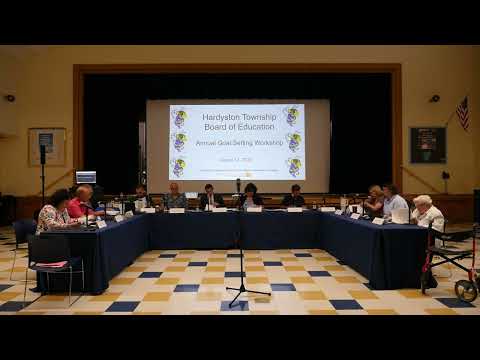
Board adopts school culture survey policy after heated debate, 5–4
Summary
After extended debate over third‑party validation and removal of 'equity' language, the Hardyston Board of Education adopted a school culture survey policy on Aug. 12 by a 5–4 vote. Dissenting members cited concerns about board overreach and wording.
The Hardyston Township Board of Education voted 5–4 on Aug. 12 to adopt a school culture survey policy that establishes a framework for administering a validated, anonymous instrument to gather feedback from students, staff and families.
The policy (POL 1) calls for the district to use a validated evidence‑based instrument — potentially procured from a third‑party vendor — to collect confidential feedback and to post public summaries or key takeaways. Supporters said a third‑party approach preserves confidentiality and ensures consistent, comparable reporting. Detractors argued the policy formalizes an unnecessary board requirement and questioned language that had been edited to remove references to "equity" or "inclusivity."
Board debate and positions
Board member Ed (speaker 2) opposed the final policy language and argued the removal of the word "equity" undercuts the survey's purpose: "By removing the word equity in conclusion, you just negated that central tenet of educational practice," the member said during the discussion. He also questioned why the board would require a third‑party vendor when the administration conducts surveys and could deliver results.
Board President responded that the policy provides a neutral framework and protects raw data confidentiality, and proponents said anonymized third‑party collection can help ensure candid responses. Superintendent Mike Ryder, who said he does not object in principle, emphasized he wants no perception that he would withhold or manipulate information and supports transparent reporting.
Public comment reflected the divide: Michelle Mann Allen praised district leadership and told the board some community members view the policy and the debate through a political lens, while another commenter raised concerns about a local social media page using the board's name.
Vote and next steps
The roll call on the policy recorded five yes votes and four nos; the measure passed and the board authorized administration to move forward with procurement and to present the specific instrument and vendor options to the board for approval. The policy can be revised later if the board determines changes are needed.
Why it matters: A formal culture‑survey policy affects what evidence the board will use to measure climate and inclusion, and the choice of instrument and vendor will determine how results are collected and reported to the community.
Who said it (examples)
- "By removing the word equity in conclusion, you just negated that central tenet of educational practice," a board member said in opposition to the draft language. - "It just removes the raw data from the superintendent and just presents the data that's been qualified," the Board President said in support of third‑party administration.
What to watch: Administration is expected to return with vendor options, a draft instrument (questions) and a timeline for administration and public reporting; the board indicated it will review the instrument before launch.