Get Full Government Meeting Transcripts, Videos, & Alerts Forever!
Get email alerts on the Land Use Datacenters topic
No spam. Unsubscribe anytime.
Yankton County hears hours of public comment and experts as commission considers moratorium, zoning for data centers
Summary
After weeks of inquiries, the commission opened a public hearing on a draft moratorium and drew extensive testimony — residents warned of water and power strain and limited local jobs while developers and utilities said smaller modular facilities use closed-loop cooling and would pay infrastructure costs; commissioners asked staff to draft notice and consider expedited zoning work.
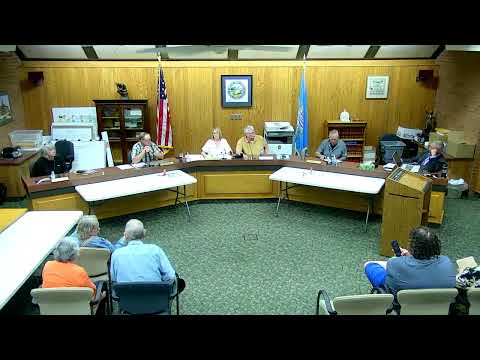
The Yankton County Commission spent the bulk of its June 16 meeting on whether to place a temporary moratorium on new data centers while the county drafts zoning and regulatory standards.
Commissioner (speaker 5), who introduced a draft resolution that would pause new large-scale data-center approvals, said the moratorium would allow the county time to develop clear, site- and scale-specific rules. The draft sets a lower threshold (250 kilowatts) intended to exclude routine server rooms but would stop larger projects pending ordinance work.
Speakers for the moratorium said they were motivated by concerns about competing demands for scarce water resources, possible upward pressure on local electric rates, noise and light pollution, limited long‑term jobs, and uncertain environmental or decommissioning impacts. Travis Schultz (speaker 29) told commissioners the county has experienced chronic drought and said, “Data centers . . . require a large amount of water,” and warned that large electric draws can raise rates for existing residents.
Residents including teachers, business owners and long-time homeowners said sales- or usage-based tax shifts would not compensate for higher household bills, and several urged robust setback, noise and decommissioning requirements before any approval.
Developers and industry representatives urged caution about overbroad restrictions. Drew O’Brien (speaker 10), representing a development client, said the firm is looking at 10–20 megawatt modular facilities that use closed-loop cooling and that, after initial filling, ongoing water use would be comparable to a single-family home for on-site staff. He also said the developer would pay the full cost of grid or distribution upgrades required to serve a site, and that a small facility typically brings 8–20 full-time jobs with average salaries he described as near $80,000.
Paul Mance of Northwestern Energy (speaker 27) told the commission the utility will require large customers to pay for generation, transmission and distribution upgrades that are necessary to serve them, "protecting existing customers and preventing those costs from being shifted onto families and businesses." Scott Sandel (speaker 33), who built a data center in the region in 2008, described colocation facilities and said many existing centers can be managed so impacts are mitigated.
Commissioners did not vote on a moratorium at the meeting — state law requires at least 10 days’ public notice before adopting an emergency measure — but the board directed staff to prepare public notice language, and commissioners discussed limiting any moratorium so it expires once an ordinance is adopted. They also debated whether to appoint a special task force or charge the planning commission to draft zoning quickly.
Next steps: staff will prepare notices and a proposed ordinance; commissioners discussed scheduling a special meeting or using the July meeting cycle to capture public input and a draft ordinance for review.