Get Full Government Meeting Transcripts, Videos, & Alerts Forever!
Get email alerts on the East Loop Public Comment topic
No spam. Unsubscribe anytime.
Residents, business owners press Bolivar leaders on East Loop roundabout safety and access
Summary
At a public comment session on Bolivar’s East Loop project, property owners and business operators raised safety, sight‑distance and access concerns about a planned roundabout; engineers and MoDOT representatives said the design includes truck aprons and meets MoDOT criteria, and staff outlined funding and environmental steps.
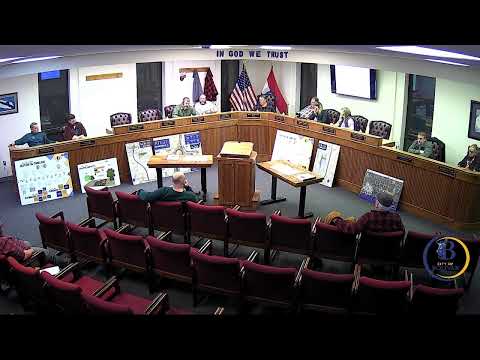
Hundreds of residents attended the City of Bolivar’s public comment session on the East Loop project, and several property owners and business operators urged the Board of Aldermen to reconsider design elements they say will create safety and access problems.
Ray Leininger, who owns property at the Buffalo Road/132nd intersection, said the roundabout proposed at the north end would improve that junction but likely create hazardous conditions where the new road meets Buffalo Road and 132nd. “There’s a blind spot…Somebody’s gonna get killed,” Leininger said, describing limited sight distances for drivers approaching from the north.
Business owner Allen Simpson said the proposed work could cost roughly $10 million for a roundabout and short connector yet deliver only marginal travel‑time benefits unless the project is extended through additional right‑of‑way. He urged the city to secure land and funding for a full through connection before committing major construction dollars.
Local driver and hauler Jared Calvert said curbs and the center island could damage towed equipment. He asked specifically about the roundabout’s traversability for long trailers and large boats. In response, Jason Civils, owner and principal of Great River Engineering, said the intersection and the corridor were analyzed with turning‑movement modeling. “It is designed for … 125‑foot trailer,” Civils said, and the roundabout includes a truck apron that allows off‑tracking for oversized vehicles.
Bud Sherman, identified as a project manager with MoDOT’s Southwest District, told the meeting MoDOT has tested the design for common semitrailers (WB‑67) and that the proposed apron elevation is minimal: “it’s only an inch and a half higher than the pavement,” minimizing adverse rocking or tipping for large loads while permitting overrun during maneuvers.
Engineers said a formal traffic study and warrants were completed and that MoDOT policy and design criteria led them to prefer a roundabout rather than a signal at the D/32 intersection because roundabouts reduce the number and severity of injury crashes and avoid ongoing signal maintenance and outage vulnerabilities. They also described utility‑relocation practices (utilities generally move at their own cost unless a preexisting easement requires compensation) and said environmental/NEPA clearances and grant conditions could extend the schedule.
Residents raised additional concerns about inconsistent right‑of‑way figures presented to homeowners, possible loss of drive access for businesses (one speaker said a revised design removed an existing access), the effect on nearby school‑traffic patterns, and the potential need for sidewalks. County Commissioner Bob Moreland said extending the city project across county roads without county funding could create significant county budget pressure and recommended the city plan controlled intersections where the project ties into county infrastructure.
Staff and the engineering team responded that the project is being advanced in phases to match available grant funding, that some grants (including a HUD earmark identified in staff materials) can reimburse soft design costs, and that design changes requested by landowners could require rework and additional environmental review. No final construction decision or referendum was made at the meeting; board members were urged to weigh resident concerns during forthcoming deliberations and budget planning.