Get Full Government Meeting Transcripts, Videos, & Alerts Forever!
Get email alerts on the Battery Ordinance topic
No spam. Unsubscribe anytime.
Topsham energy panel moves battery storage ordinance forward with legal review, plans community safety outreach
Summary
Topsham's Energy Committee confirmed it has asked an energy law clinic to review a draft battery storage ordinance and discussed safety, interconnection timelines and public outreach; members weighed ballot timing and expert speakers to address resident concerns.
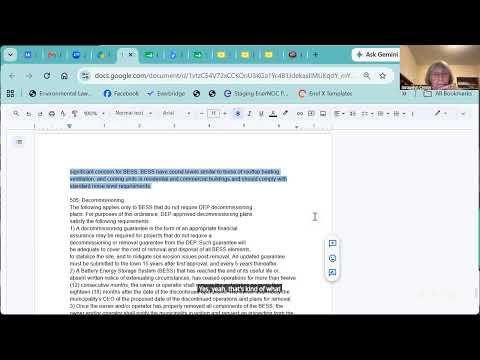
The Topsham Energy Committee said it has asked an external legal clinic to review a draft battery storage ordinance and is preparing public-safety outreach as it refines the proposal. Chair said the engagement letter from the Energy Law Clinic (Vermont Law School) is on the select board agenda Thursday and that the clinic will begin reviewing the committee's draft with its embedded comments.
The committee framed the legal review as targeted help on safety and regulatory questions. "We just exported literally what we've been working on together with all of our comments," the Chair said, adding the clinic will help the committee understand how the draft fits with NFPA standards and state rules, including decommissioning requirements. The committee flagged NFPA 855 as a code they want the reviewers to examine.
Why it matters: Battery energy storage projects raise questions about fire risk, interconnection timelines and local authority. Committee members noted that interconnection studies can be lengthy and that residents are likely to raise safety concerns, so the committee wants both technical and legal expertise before moving to formal votes or public hearings.
Committee discussion and next steps Committee members discussed timing and path to adoption. One member said some interconnection studies can take "like 5 years," and the group discussed whether to pursue a local ordinance ahead of, or as part of, a broader zoning recodification. The Chair said a faster review could allow the town to consider ballot placement in November if definitions and zoning integration are ready by early September, but several members cautioned that is an aggressive timeline and integration into the town's recode effort may be more realistic.
The committee also discussed community benefit agreements and tax questions. "They can help us with the community benefit agreement," the Chair said, noting the legal clinic could advise at what point developers and the town should negotiate benefits. A staff member reminded the committee of an attorney's guidance that developers must offer community benefits rather than the town soliciting them.
Preparing residents: education and neutral expertise Members emphasized preparing neutral, evidence-based materials for public meetings. The committee discussed producing a PowerPoint and handouts and inviting trusted, neutral experts to explain the science behind safety standards and past incidents. A staff member suggested bringing a fire code or safety expert and noted agencies such as the NFPA, ATF or occupational-safety researchers may be sources for neutral educational material. "For community engagement purposes ... safety is probably going to be the biggest thing that people are concerned about," the Chair said.
Formal actions and public process At the meeting the group agreed to continue email exchanges with the legal clinic and suggested inviting the clinic to a future meeting for live discussion of edits and questions. No ordinance vote was taken at the session; planning-board review and at least one public hearing will be part of the formal process if the committee advances the draft.
The committee also asked staff to track procedural deadlines linked to the town's recodification timeline and to prepare neutral educational materials for residents before broader public hearings. The Energy Committee is scheduled to meet again July 21.