Get Full Government Meeting Transcripts, Videos, & Alerts Forever!
Get email alerts on the Taxes Sales topic
No spam. Unsubscribe anytime.
Matanuska-Susitna Assembly deadlocks on competing area-wide sales-tax plans after long public hearings
Summary
The borough assembly spent hours debating competing proposals to replace area-wide property tax with an area-wide sales tax, hearing strong public testimony for and against and approving multiple amendments but taking no final, ballot-ready action tonight.
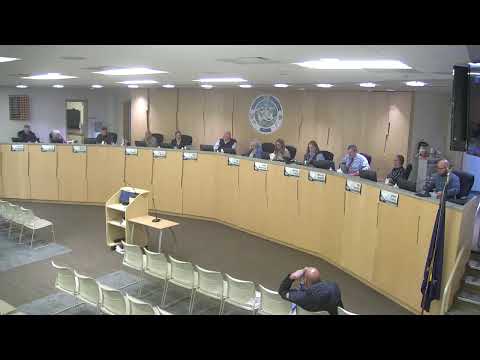
The Matanuska-Susitna Borough Assembly spent much of its June 16 meeting debating competing proposals to shift funding from the area‑wide property tax to an area‑wide sales tax, with no single measure cleared for the November ballot.
Supporters said a sales tax would broaden the revenue base and ease property-tax pressure; opponents warned that even modest sales rates risked large shortfalls, would hit low‑income households, and could drive shoppers to neighboring municipalities. City officials testified against layered sales taxation in places that already have city levies.
Why it matters: The ordinances discussed would change how the borough pays for roads, emergency services and other area‑wide functions. The assembly considered at least three competing written proposals: one pairing a 6.5% sales tax with repeal of the area‑wide property tax and a $75,000 owner‑occupied exemption, and alternative drafts that would apply lower sales‑tax rates (1%–5%) with different exemption and geographic scopes. Staff analysis showed the borough currently receives about $130 million in area‑wide property tax revenue; modeling presented at the meeting suggested material revenue risk at lower sales‑tax rates because of “elasticity” (lost local sales as rates rise) and the challenge of measuring online and out‑of‑borough purchases.
What speakers said: Crystal Nygaard, deputy administrator for the City of Wasilla, read a Wasilla City Council resolution opposing ordinance 26‑032 on the grounds that a borough‑administered sales tax layered on top of city taxes would create combined rates that could reach 9% in places like Wasilla, harm local retailers, and transfer tax administration away from cities that currently collect their taxes. "A combined 9% sales tax rate may discourage retail activity within the city," Nygaard said.
Assembly sponsors defended their proposals as a way to reduce disproportionate burdens on property owners and to capture revenue from visitors. "If you give a property‑tax exemption just across the board, you are benefiting large corporations that don't live here," one sponsor said, arguing a modest sales tax helps shift some costs to visitors and remote purchasers.
Numbers and implementation questions: Finance staff cautioned that the revenue projections depend heavily on assumptions about online sales, visitor spending and behavioral changes. The finance director provided estimates showing a 1% borough‑wide sales tax would yield roughly $21–22 million under current assumptions; officials noted that the rate required to replace the $130 million in area‑wide property tax would be substantially higher (estimates presented to the assembly ranged into the mid‑single digits or higher depending on assumptions and proposed exemptions). Staff also highlighted the need for new collection and enforcement staff if a borough sales tax were adopted.
What the assembly did: Members introduced and voted on multiple amendments — including proposals to lower the proposed rate, to limit geographic application, and to pair a sales tax with a property‑tax cap — and voted to postpone some items for further study. Several amendments were approved, others withdrawn. Multiple members said they would not support placing any rate on the November ballot unless the revenue estimates and administrative impacts were clearer.
What’s next: No sales‑tax ordinance was finalized for the November ballot at tonight’s meeting. Sponsors said they will continue working on revenue models and legal language and that additional hearings or a revised ordinance may return to the assembly at future meetings.