Get Full Government Meeting Transcripts, Videos, & Alerts Forever!
Get email alerts on the Animal Welfare topic
No spam. Unsubscribe anytime.
PETA urges Nash County to ban chaining and require shelter sterilization
Summary
A PETA representative told the Nash County Board of Commissioners that tethering harms dogs and urged passage of a chaining ban and a requirement that shelter animals be sterilized before adoption; commissioners pressed staff on shelter budget impacts and expressed general support for exploring mandatory spay/neuter policies.
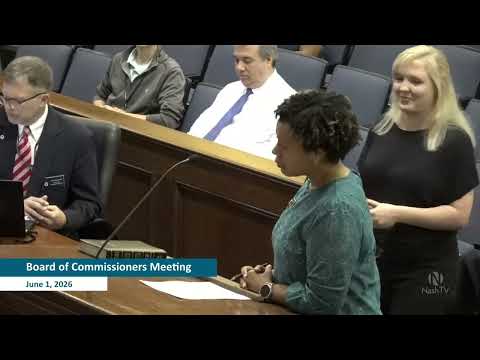
Rachel Bellas, who identified herself as the director of local affairs for People for the Ethical Treatment of Animals, told the Nash County Board of Commissioners on June 1 that chaining is “so harmful to dogs” and urged elected officials to adopt an ordinance banning the practice and to require that animals be sterilized before adoption. Bellas said PETA’s Community Animal Project has delivered insulated dog houses, performed spay/neuter surgeries and supported local animal control work, and that the group is willing to help any locality implement new rules and public outreach.
Bellal cited a 2024 cruelty case in the area in which emaciated chained dogs and deceased animals were found, saying that, “had there been a ban on chaining, animal control could have acted quicker in this case.” She also argued that pre-adoption sterilization reduces intake and euthanasia at shelters and that many jurisdictions that require pre-adoption sterilization see fewer strays and lower shelter workload.
Commissioners followed Bellas with questions about local impacts and shelter operations. Commissioner Howe (speaker 9) pointed to staff budget figures showing large recommended increases for animal shelter contracts, veterinary services and supplies in FY27 and argued those costs underscore the county’s interest in reducing reproduction through sterilization. County officials said the recommended animal operations increases are part of the draft FY27 budget that commissioners are reviewing.
Bellas answered that pre-adoption sterilization removes the burden from new owners and improves public safety by reducing roaming and aggressive behavior. She said PETA would support phased rollouts and public education and offered examples of sample ordinances in other states.
No formal ordinance was proposed at the meeting; commissioners encouraged staff to continue budgeting for the shelter and to return with options for how a mandatory pre-adoption sterilization policy could be implemented. The board did not take any immediate legislative action at the meeting; staff and commissioners indicated they would consider the policy in the broader context of the FY27 budget and shelter operations.