Get Full Government Meeting Transcripts, Videos, & Alerts Forever!
Get email alerts on the Budget topic
No spam. Unsubscribe anytime.
Fort Lee district unveils $104.8M tentative budget, proposes 19 staff reductions to close $3.9M gap
Summary
Superintendent Flazo and business administrator Winderknecht presented a $104.79 million tentative 2026–27 budget that relies on a 2.98% local tax levy increase, a $2.95 million capital-reserve withdrawal and proposed reductions of 19 positions to close an estimated $3.9 million shortfall.
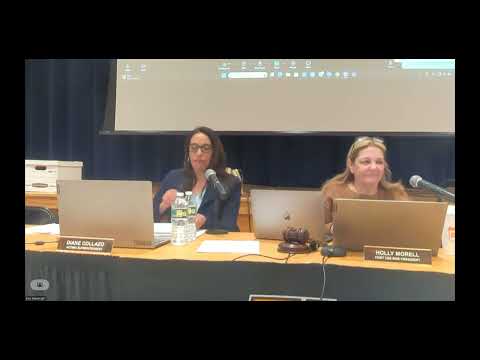
Fort Lee Board of Education leaders presented a tentative $104.79 million budget for 2026–27 on Feb. 26, saying rising health-benefit costs and other enrollment-linked pressures created a projected $3.9 million gap that the district must close.
Superintendent Flazo told the board the budget process involved district administrators and board committees and that the district prioritized student safety, strong instructional programs and student support services in preparing proposals. “Our priority was really to ensure that our students’ educational experience remain as unchanged as possible,” she said.
Business administrator Mr. Winderknecht outlined the district’s revenue picture, saying the proposed tentative budget reflects a 2% general-fund tax levy cap adjustment plus additional statutory adjustments for factors such as health benefits and enrollment, resulting in a 2.98% levy change. He gave the tentative revenue and appropriation total as roughly $104.79 million and noted the district plans to withdraw about $2.9–$2.95 million from the capital-reserve account to fund several planned capital projects.
Administrators listed several capital expenditures included with the tentative budget: high-school safety and communications upgrades ($297,000), high-school first- and second-floor ADA restroom upgrades ($416,500), an intermediate-school rooftop chiller (budgeted at $1,190,000) and condensate-drain repairs at the intermediate school (budgeted at $892,500). Winderknecht said awards for the rooftop chiller and condensate repairs were expected to be made that evening.
The presentation stressed that salaries and employee benefits account for the majority of spending (about 70% combined), and that health-benefit increases were a major driver of the current budgetary pressure. Winderknecht said the district received an approximately $246,000 increase in state aid but that the increase was not sufficient to offset rising costs.
After reviewing operational reductions and program consolidations that produced about $1.3 million in savings (including a new student reengagement program intended to return some students in out-of-district placements), Flazo said the district still faced a remaining gap of roughly $2.6 million. To close that remaining gap, administrators proposed eliminating 19 positions (about 3.1% of staff). She described the reductions as the last resort after attempts to reduce costs through attrition and program consolidation, and emphasized the decisions were not performance-based: “These are colleagues…in no way does this reflect their performance,” she said.
Administrators presented enrollment trends showing a roughly 5% decline over recent years across most schools, and said K–6 average class sizes were projected to remain near current averages (about 20–21 students), with projected maximums likely not to exceed 24–25 in most cases. Special-education class sizes and placements will continue to follow statutory requirements.
Public comment during the meeting centered on the budget and broader funding issues. Justin Rivera, a resident, told the board local cuts reflected larger federal- and state-level funding decisions and warned that reductions in federal support lead to fewer teachers and resources in classrooms. Alan Lipoff, a teacher and union treasurer, asked procedural questions about the timeline for preliminary and final budget approval and asked for clarification on intermediate-school HVAC projects; administrators said the public hearing is scheduled for May 4 at 7:30 p.m., that the chiller project work is expected to begin July 1 and that the chiller should be operational by Sept. 1 if the schedule holds.
The board approved multiple routine consent items and personnel-related items during the meeting by roll-call vote. Administrators said the tentative budget materials would be posted to the district website and that the board would submit the tentative budget to the county executive superintendent as required by statute. The public hearing on the budget is scheduled for May 4 at 7:30 p.m. in the study room, at which any significant changes would be noted and offered for further public review.
Votes at a glance - Motion to enter executive session to discuss legal and personnel matters: moved and seconded; approved by voice vote. (Motion maker: Curry; second: Rita) - Motion to approve grouped agenda items (examples listed on the agenda): carried by roll-call. (Recorded yes votes in the transcript by board members.)
What happens next The board will file the tentative budget with the county executive superintendent as required; the tentative budget will be published on the district website and the board will hold a public budget hearing on May 4 at 7:30 p.m. before finalizing any adjustments.
Reporting note: Article uses direct quotes and procedural details from the Feb. 26 public meeting. Where the transcript names specific projects and amounts, those figures are reported verbatim.