Get Full Government Meeting Transcripts, Videos, & Alerts Forever!
Get email alerts on the Open Enrollment topic
No spam. Unsubscribe anytime.
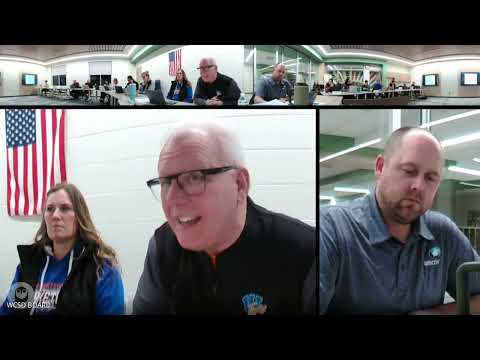
Wrightstown board weighs expanding open-enrollment seats to shore up district finances
Summary
The Wrightstown Community School District board discussed raising open-enrollment caps (especially 4K–K) to generate per-student revenue after recent budget cuts, while asking staff for enrollment projections, staffing cost estimates and teacher feedback before a January vote.
The Wrightstown Community School District board on Monday debated raising open-enrollment seat caps for the 2026–27 school year as a way to offset recent reductions in state and other funding.
A staff member told the board the district receives $11,030 per open-enrolled student and argued that admitting more students, especially at 4K and kindergarten, would create recurring revenue. “We get $11,030 per open enrollment included in, and so roughly for every 10 kids, that’s a $110,000,” the staff member said, adding that a kindergarten cohort that remains through graduation can be worth roughly $100,000 over time in his estimate.
Board members pressed for details on classroom capacity and the effect on student learning. Several members noted current “bubble” classes — including grades with about 99 to 105 students — and asked whether increasing caps would force additional hires or schedule changes. The presenter said the district would add a teacher at 4K or kindergarten if caps reached the threshold that triggered hiring, estimating a teacher cost at about $70,000 and calling the net fiscal effect positive if seats filled.
Members raised special-education needs and staffing concerns as key constraints. One principal said the district’s seat-average for special education is about 11–13 percent, and members estimated that, with higher enrollment, the district could see an additional 10–12 students needing special-education services at certain grade bands. Board members asked staff to produce a clearer estimate and noted that open-enrolled students who are accepted tend to remain enrolled in the district in subsequent years, meaning changes are multi-year commitments.
The district’s process and legal timing were central to the discussion. Staff reminded the board that by state rules the board must set open-enrollment caps in January for the upcoming period and that once set, the cap cannot be reduced mid-cycle. The board discussed using selective grade openings (for example, opening 4K and kindergarten seats but leaving other grades closed) and detailed how lotteries and wait lists would operate when applications exceed available spots.
Rather than vote Monday, board members requested additional data. They asked for three-year natural-growth statistics by grade, a teacher-survey on comfort with proposed caps (for example, whether 85 for 4K would be acceptable), and an estimate of how many open-enrolled students historically remain through later grades. Staff said they would present the information to teachers at an informational session (planned for Jan. 16) and return to the board in time for the Jan. 28 regular meeting when the board may take formal action.
The discussion mixed fiscal and instructional considerations: proponents emphasized the budgetary benefits of added seats and compared local class-size norms to neighboring districts, while opponents emphasized limits on staff, special-education capacity and middle-school scheduling constraints. The board agreed to gather more evidence before making a final decision.
The workshop ended with direction for staff to supply the requested data and to solicit teacher feedback; no formal motion on open enrollment was taken during the meeting.