Get Full Government Meeting Transcripts, Videos, & Alerts Forever!
Get email alerts on the Historic Preservation topic
No spam. Unsubscribe anytime.
Jones County commissioners narrow plaque wording for Jake's Woods, will seek family review
Summary
At a June 16 work session the commission directed staff to shorten bronze plaque text for Jake's Woods to avoid duplicating a courthouse monument, circulate a draft to the Hutchins family and stakeholders, and use supplemental signs or QR codes to present the full history.
Jones County commissioners met in a June 16 work session to refine wording for a bronze plaque and broader interpretive signage at Jake's Woods park. The discussion focused on keeping the monument text concise while preserving the full history of Jacob ("Jake") Hutchins through additional on-site signs and QR-linked material.
The panel's primary presenter opened the session by saying, "our work session today is to figure out what to put on the signage at Jake's Woods at the park," and explained that an AI-assisted draft produced more words than would fit on a standard historic marker. Commissioners and other participants compared the draft with an existing courthouse monument and agreed the plaque should not duplicate the courthouse text.
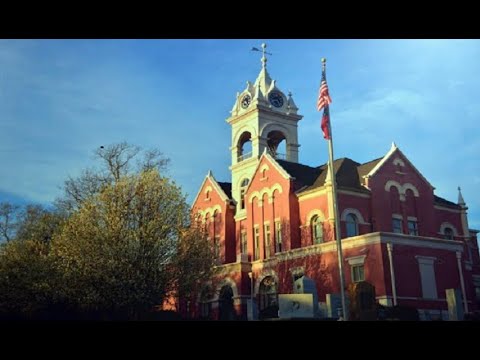
Commissioners and community contributors reviewed the historical highlights proposed for the plaque. The presenter read the courthouse monument wording aloud—"Born a slave in 1831, Jacob eventually became property of R. H. Hutchins of Jones County, Georgia. He was a skilled stone mason… He was elected as the first black state representative for Jones County in 1868 and died on June '9"—and said the county should preserve Hutchins's name and legacy on the park signage while avoiding redundancy with that courthouse text.
Speakers also recommended a layered approach: a concise bronze plaque at the park entrance supplemented by additional printed signs or an on-site interpretive display and QR codes that link to photographs, timelines and short videos. One participant proposed, "the QR code thing is just a sign with a QR code. And when they click on it, it sends you to a link that shows you some of the artifacts that John Simmons found," which presenters said could carry the longer family and chronology material that would not fit on the plaque.
Several community concerns guided the conversation. A resident asked the commission to consider family preferences for a more formal park name rather than simply "Jake's Woods," and the commission agreed to send the draft plaque wording to Hutchins descendants, the historical society and other stakeholders for review and feedback. Commissioners discussed practical options—ordering a larger bronze monument or producing additional signs around the trails—but emphasized that wording and sentiment were more important than strictly matching an official marker's dimensions.
Panel members noted practical limits on artifact display and security: originals are vulnerable to vandalism, so they recommended using QR-linked media and temporary exhibits (for events such as Clinton Ward Days) instead of permanent artifact installations. They also observed that QR codes could help track visitor engagement—"it'll be a way for us to track who's coming through there"—while others raised light privacy concerns about tracking.
The session concluded with an agreement to narrow the plaque text for the bronze marker, circulate the draft to family and stakeholders for comment, and produce supplemental signage or QR-linked material to present the fuller history. A motion to adjourn was made and seconded; the transcript ends after the second without a recorded vote in the provided segments.
Next step: staff will prepare a tightened draft of the bronze plaque text and a list of stakeholders to receive it, so the family and historical partners can review and suggest changes before final production.