Get Full Government Meeting Transcripts, Videos, & Alerts Forever!
Get email alerts on the Town Center topic
No spam. Unsubscribe anytime.
Commission seeks walkable 'town center' standards, adds operable‑door requirement
Summary
The commission refined a town‑center overlay proposal that would require corner architectural features, storefront glazing and an operable door or window available to the public during business hours; commissioners also discussed pedestrian safety on state highways and potential UDOT coordination.
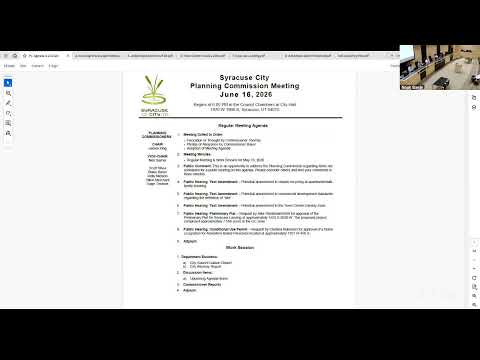
City planning staff presented proposed town‑center overlay text amendments intended to foster a walkable intersection in the city’s core by requiring features such as chamfered corner storefronts, transparent glazing, awnings, a two‑story tower element and no drive‑throughs between building and roadway.
A resident, Sean Jordan, raised safety concerns about vehicles leaving the state highway and striking buildings near the intersection. Commissioners discussed mitigation options including planter boxes, bollards and coordination with the Utah Department of Transportation. Staff said some roadway enhancements are possible but require UDOT approval if work is inside the state right‑of‑way.
A substantial portion of the hearing focused on an “operable door or window” requirement intended to ensure storefronts are genuinely accessible to pedestrians rather than glazed facades or backroom doors. Commissioners debated how to prevent token features (locked or ceremonial doors). One commissioner proposed wording that would require the operable door or window to be available for public access during business hours; staff said they would refine language to ensure the intent is enforceable.
The commission voted to recommend the town‑center overlay changes, including language that an operable door or window be available for public access during business hours, and asked staff to return with refined wording and a definition for corner buildings where appropriate.
Next steps: Staff will revise the draft to clarify operable‑door requirements and add definitions (corner building, setbacks) before forwarding a final ordinance to the city council.