Get email alerts on the Human Services topic
No spam. Unsubscribe anytime.
Human Services reports steady caseloads, flags CCAP/TANF and HR1 impacts
Summary
County human‑services staff reported March financials and current caseloads, said the county expects state support for CCAP over‑expenditures this year, and warned federal policy rollouts (non‑citizen Medicaid changes and work‑requirement redeterminations) may affect service demand beginning October and January 2027.
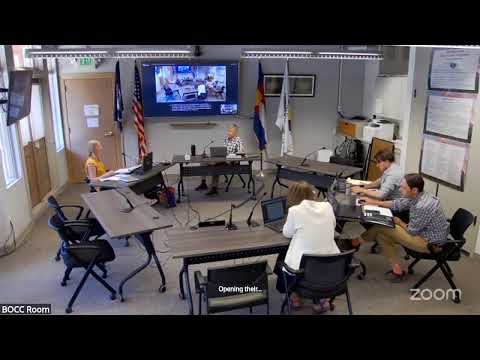
San Miguel County commissioners heard a financial and caseload briefing from Human Services staff June 17 and approved the department’s financial reports and caseload tables.
Human Services staff reviewed the department balance sheet, earned revenue and expenditures through March 2026, noted CCAP (child care assistance program) over‑expenditure concerns and said they expect state reconciliation to cover current shortfalls. Staff described caseloads as generally steady after last year’s public‑health emergency roll‑off; county Medicaid caseloads have fallen from 610 (July 2025) to about 538 (May 2026) and staff said they expect a stabilization level in the mid‑500s.
Staff also warned commissioners about two imminent policy changes: (1) non‑citizen Medicaid eligibility changes stemming from HR1 that will begin in October (counties should expect state guidance), and (2) anticipated Medicaid six‑month redeterminations and work‑requirement processes scheduled to begin Jan. 2027. Commissioners and staff discussed whether the county should attempt to forecast local numerical impacts; Human Services said statewide projections exist but that local breakdowns are not yet available and that staff will continue to monitor and coordinate with local clinics and public‑health partners.
The board voted to approve the department financials, expenditures and caseload reports as presented. Commissioners suggested staff consider coordinating a presentation to local clinics and health‑care providers as policy rollouts progress.
AI generated
The text on this page is AI generated. Summaries, highlights, analysis, and video transcripts are all produced from the original source material.
AI can make mistakes, so if you spot one, and we will fix it for everyone.
Note: the source content is unaltered by us. Any content source we link to, be it a video, an audio recording, or a document, is presented exactly as its publisher released it. That publisher is usually a government body, sometimes an individual official or another organisation.