Get Full Government Meeting Transcripts, Videos, & Alerts Forever!
Get email alerts on the Data Center Proposal topic
No spam. Unsubscribe anytime.
Residents ask Lansing board to press for environmental review of proposed AI data center on Cayuga Lake
Summary
Speakers representing FLX Strong presented a petition nearing 20,000 signatures and urged the Town of Lansing to press for an environmental impact statement, raise questions about water use and soil contamination, and forward the petition to the Planning Board; the town said it has not received a complete application from the developer.
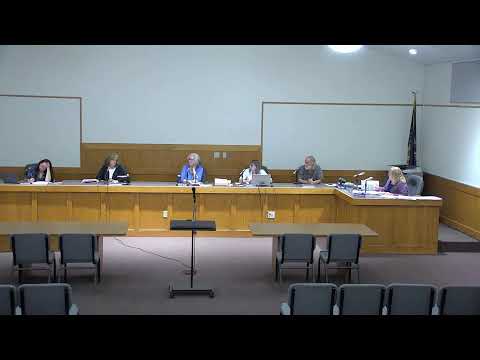
Ken Wolken, president of community group FLX Strong, told the Town of Lansing board at its meeting that an online petition opposing a proposed 300-megawatt AI data center on Cayuga Lake was closing in on 20,000 unique signatures and urged the town to review the list and related maps and to engage actively with the issue.
"The petition is closing in on 20,000 unique signatures, with 17,000 of those belonging to New York State residents, and 8,100 coming from individuals living within 40 miles of the proposed data center site," Ken Wolken said, asking the board to share the petition with the planning board and consider broader advocacy, including a letter to the governor supporting a state moratorium the speakers said had passed the legislature.
Why it matters: Public commenters told the board the proposed data center could affect water quality, wildlife, wetlands and local electricity demand and cited potential economic and public-health consequences if large volumes of water are used for cooling or if construction disturbs legacy contamination.
John Dennis asked the board to require an environmental impact statement and flagged apparent inconsistencies in developer statements about water use. Quoting a role that he said a developer representative gave at a prior meeting, Dennis recalled a claim the facility would operate as a closed-loop system with "1 to 2 gallons a day" of leakage, but said other figures he reviewed suggested far higher peak water use if misting or other cooling were employed. "When I Google how much a closed-loop high-performance computing data center uses for misting on hot days, I got replies that it is 1.3 to 3,000,000 gallons of water per day," he said, and questioned whether the local water supplier could meet peak demand.
Lisa Lincoln, also speaking on behalf of FLX Strong, raised concerns about legacy heavy-metal contamination near the proposed site and the risk that construction could mobilize contaminated dust and sediments into Cayuga Lake. She urged the town and planning board to require soil testing, remediation where appropriate and a full environmental review before the project moves forward.
Board response and next steps: The board acknowledged receipt of the petition, said it would forward the petition to the Town of Lansing Planning Board, and noted the town had not yet received a complete application from the developer (referred to in public comment as Terra Wolf/TerreWolf). The board therefore said it had no formal response at this time but confirmed that planning-board review and any required environmental review would be the next procedural steps if an application arrives.
The hearing record: These comments came during the meeting’s public comment/privilege-of-the-floor section. Town staff and board members repeatedly advised that substantive environmental and site-specific questions are typically addressed through the planning-board process and site-plan review, and that the board would pass the petition to the planning board as requested. The planning board, not the town board, leads SEQR/environmental-review determinations when it is the lead agency on a site application.
What remains unclear: The town indicated it has not received a complete application from the developer, so many technical details referenced by commenters (exact water-use design, final site grading and remediation scope, or the developer’s definitive cooling technology choices) remain unspecified in the public record as of the meeting. The board did not take a formal vote on the petition itself; it only confirmed it would forward the materials to the planning board for consideration.