Get Full Government Meeting Transcripts, Videos, & Alerts Forever!
Get email alerts on the Signage topic
No spam. Unsubscribe anytime.
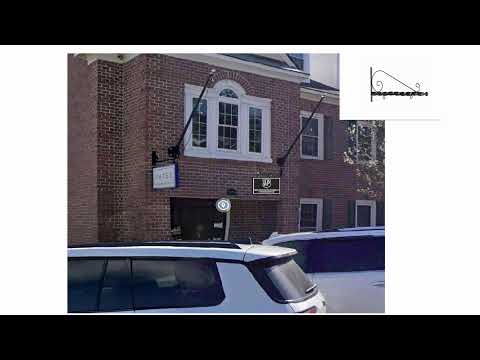
Conway appearance board approves two wall signs for 304 Elm Street with staff verification required
Summary
The Conway Community Appearance Board approved two non‑illuminated wall signs for Cosmo at 304 Elm Street, conditioning the permit on staff verification that the lettering, borders and logo meet dimensional (thickness) standards.
The Conway Community Appearance Board approved two wall signs for Cosmo at 304 Elm Street on a motion that required staff verification of the signs’ dimensional thickness before a permit is issued. The board’s chair called the vote after a committee member moved to approve the application with the stated proviso.
A staff member told the board the applicant seeks two non‑illuminated wall signs: a primary sign above the front entrance measuring 6 feet wide by 4 feet high (24 square feet) and a secondary side wall sign measuring about 9.5 feet by 3 feet (28.5 square feet). Staff said the proposed signs otherwise comply with the Unified Development Ordinance (UDO) but that the applicant had not provided letter‑depth dimensions.
Board members debated whether to defer the item until the applicant could provide a sample demonstrating dimensional depth or to approve with an explicit condition that staff verify thickness. A staff member advised the board that if the lettering were merely a vinyl overlay with minimal projection it would not meet the board’s usual standard for dimensional signage and that staff could withhold a permit in that case. The committee member who moved approval said the motion would include a requirement that "the lettering and borders and logo have a thickness that shall be approved by staff prior to granting a permit." The board approved the motion by voice vote.
What this means: the board authorized the signs but requires staff to confirm the signs meet the board’s dimensional standards before issuing a permit. The transcript does not identify the applicant by name nor record individual board members’ votes beyond the voice vote that carried the motion.
Next steps: staff will inspect samples or materials submitted by the applicant and determine whether the lettering and borders meet the board’s dimensional standard; the permit will be issued only after that verification.