Get Full Government Meeting Transcripts, Videos, & Alerts Forever!
Get email alerts on the Data Centers Preparedness topic
No spam. Unsubscribe anytime.
Fairfield County hears experts on data centers, urged to prepare rules and a regional task force
Summary
Experts told Fairfield County leaders that large data centers act like utility infrastructure—requiring land, power, cooling, water and fiber—and urged early regional coordination, disclosure requirements and community-benefit terms before any developer arrives.
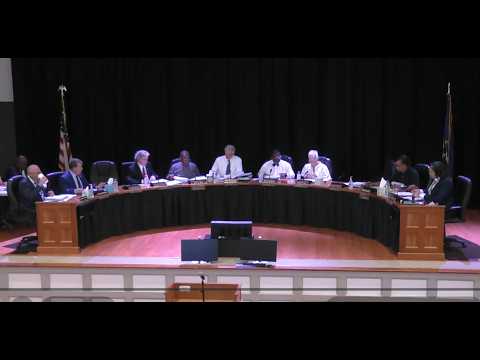
Representatives and residents of Fairfield County convened an informational session to hear technical and policy briefings on data centers and to discuss local concerns, including water use, air emissions and transparency.
State Representative Annie McDaniel opened the meeting by saying she wanted the county to be proactive rather than surprised if developers approach the area. She said she had met with Brookfield, which is buying a plant in Fairfield County, and that the goal of the session was to make sure any projects would benefit residents over the long term.
Chris, a Mid‑Atlantic sector manager with TY Lin International, told attendees that modern data centers “are major infrastructure” that rely on large supplies of land, power, cooling, water and fiber. He said communities that define expectations early can negotiate for infrastructure upgrades, workforce commitments, reporting requirements and decommissioning plans, rather than reacting under tight developer timelines. He recommended a regional task force or ad hoc committee to create a readiness checklist, map suitable sites and coordinate utilities and emergency-response training.
Jordan, director of policy and research at Climate Exchange, described policy tools counties and states are using. He said data centers can consume substantial on‑site water for cooling and provided a figure for a medium‑sized facility of roughly 110,000,000 gallons a year (presenter estimate). Jordan recommended impact assessments, public disclosure requirements, and banning nondisclosure agreements that hide water or power usage from local authorities. On electricity, he described “large‑load tariff” proposals that protect ratepayers from stranded grid costs by requiring minimum demand charges, contract terms or collateral from large customers. On emissions, Jordan warned that on‑site natural gas plants and diesel backup generators can run more often than their “backup” label implies and urged stricter emission standards and limits on emergency use.
Presenters repeatedly urged that Fairfield County define “what good looks like” in contract and siting terms—examples included developer-funded transmission and substation work, water‑use limits, annual public reporting on power and water, local hiring commitments, clawbacks if promises aren’t met, and adaptive‑reuse or decommissioning plans so communities are not left with obsolete facilities.
No formal council action or vote occurred at the session. Organizers said they would collect and distribute slide decks and Carl Bell (District 4) said he would circulate his locally compiled report. Representative McDaniel said she will follow up with legislative sponsors to see whether state bills addressing data center siting and moratoria will be reintroduced and encouraged the county to consider local zoning and readiness steps in the meantime.
The informational session closed with an agreement to share materials and to place the topic on a future county agenda so elected officials and staff can pursue readiness planning or regulatory options.