Get Full Government Meeting Transcripts, Videos, & Alerts Forever!
Get email alerts on the Medical Practice Misconduct topic
No spam. Unsubscribe anytime.
Arkansas Medical Board declines consent offer, hears evidence alleging excessive endoscopies and risky prescribing by Dr. Alonzo Williams
Summary
The Arkansas Medical Board voted unanimously to reject a proposed consent agreement for Dr. Alonzo Williams and heard testimony from an ADH investigator and two medical experts about repeated EGDs with dilations, numerous biopsies, and continued controlled-substance prescriptions for several patients; workplace conduct complaints were also reviewed.
The Arkansas Medical Board on [date] rejected a proposed consent agreement for Dr. Alonzo Williams and instead opened a contested hearing to examine allegations that his care included repeated, short-interval endoscopies with dilations and repeated biopsies, accompanied by sustained prescribing of controlled substances to several patients.
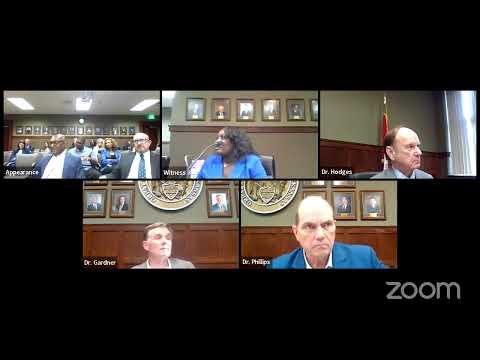
The board voted to deny the defense’s offer after hearing from defense counsel Kevin O’Dwyer and prosecutors. Michael Lewis of the Attorney General’s Office told the panel the case centers on four categories of charges: gross negligence and malpractice; overutilization of EGDs with dilations and biopsies; problematic prescribing of controlled substances; and allegations of sexual harassment. The board chair then called witnesses to the stand.
Arkansas Department of Health investigator and pharmacist Nick Scholl testified that his review of prescription-drug monitoring program (PDMP) data and subpoenaed medical records focused on six patients selected from complaints and PDMP signals. Scholl said the records showed high cumulative counts of opioid and benzodiazepine prescriptions for the targeted year ranges and unusually frequent EGDs with dilations and biopsies for several patients. He drew the board’s attention to counts and patterns in the medical records and to gaps in pill counts, pain contracts and consistent urine-drug screening.
Dr. Eduardo de Mondesert, a practicing gastroenterologist retained as an expert for the petitioner, told the board that guidelines permit dilatation when indicated but do not support repeated short-interval dilations or repeated biopsies of the same sites without a clear diagnostic purpose. He said standard next steps when a diagnosis is not established include motility testing (esophageal manometry) or pH/impedance testing rather than repeating invasive procedures, and he warned of cumulative sedation risk and the modest but real procedural risks of dilation.
Dr. Bradley Diner, medical director for the Arkansas Medical Foundation, told the panel he had met with the respondent and reviewed sworn allegations and anonymous complaints. Diner said he could not conclude that Dr. Williams has a disqualifying disorder from the materials alone but recommended a comprehensive professional evaluation to help determine fitness to practice and to identify any treatable condition that could explain boundary or conduct concerns.
Several long-term patients testified that dilations provided immediate, sometimes life-changing relief for recurrent dysphagia. They described frequent emergency visits for inability to swallow, and said dilations had restored breathing and swallowing function for months at a time. Several patients also acknowledged they had been prescribed opioids or benzodiazepines and that some later were referred to pain specialists.
Multiple current and former clinic staff described one co-worker who displayed overtly sexualized behavior at work (dancing, showing explicit images to colleagues) and said colleagues addressed it informally. Managers said they had not previously received formal HR complaints about sexual harassment by the respondent; they said reviews of patient charts after the employee left revealed some alterations in office entries and billing/coding entries that prompted further internal review. The ALJ admitted a range of documentary exhibits; the judge reserved decision on some documents containing anonymous complaints.
The board’s immediate procedural action was formal: a motion to deny the consent agreement was made, seconded and approved unanimously. The hearing continues with additional testimony and evidence planned for follow-up sessions.
What happens next
The board will continue evidence-gathering and witness testimony before deliberating on whether the charges in the show-cause order are substantiated, and whether any disciplinary action is warranted. The petitioner emphasized that medical records and expert testimony will form the factual basis for any decision; defense counsel said the respondent disputes the characterizations and offered remediation measures that the board did not accept. The ALJ and staff will compile admitted exhibits and schedule further witnesses.
Sources: Live hearing testimony and exhibits provided to the Arkansas Medical Board (investigator report, expert reports, clinic documents).