Get Full Government Meeting Transcripts, Videos, & Alerts Forever!
Get email alerts on the Wastewater topic
No spam. Unsubscribe anytime.
Hamilton budget review spotlights wastewater plant’s aging equipment, rising permit and hauling costs
Summary
Hamilton officials were warned the wastewater plant needs phased capital work and more operating funding after officials reported failing treatment metrics, a costly recent force-main break and sludge-hauling contract increases that could require roughly $8 million in near-term funding and additional bonding.
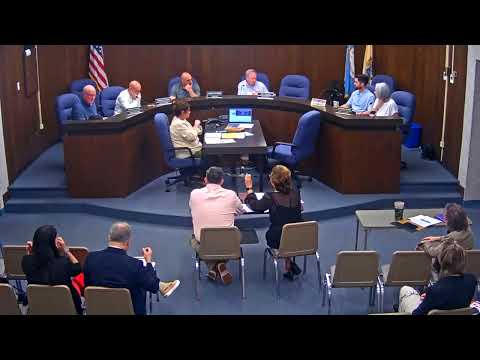
Hamilton — Council members pressed plant managers on April 4 after a detailed presentation that described rising operating costs, an aging treatment plant and a program of phased capital work the township says it must undertake to meet state permit requirements.
Carrie, the municipal official presenting the Wastewater Pollution Control (WPC) budget, told the council the plant treats roughly 7,000,000 gallons a day and serves about 100,000 people in Hamilton and Robbinsville. She said costs have climbed for energy, chemicals and insurance and that an aging workforce and recruitment challenges have left the plant short roughly 8–12 staffers. “We have quite a few vacancies,” she said, and the department is trying job fairs and other outreach to recruit skilled operators.
The presentation highlighted three cost pressures that council members flagged as urgent: a new state permit-calculation approach that pushed NJDEP fees sharply higher for some plants, sludge-hauling contract prices that have climbed from roughly $300 to more than $1,000 per container in recent years, and a recent on-site emergency — a force-main break near the Route 130 pump station that plant staff said had been exposed and required immediate contractor work.
Carrie also outlined a staged replacement program for rotating biological contactors (RBCs), the plant’s core biological treatment units. The plant replaced six RBCs last year and plans bids this year for another eight; each RBC replacement is a major capital item and the administration expects to bundle multiple projects into a multi‑year capital program. “We’re going to bid out for 8 more,” she said, describing an overall capital projection in the low tens of millions when collection-system and pump-station upgrades are included.
Plant staff said some upgrades could require bonding or state loan programs and that the administration intends to pursue State Infrastructure financing when appropriate. Carrie summarized the overall sewer budget as roughly $28 million with a 13% increase over the prior approved total and said the plant expects to use a mix of existing fund balance, grants and bonding for capital work.
Council members asked about options to reduce costs, the timing of bids and whether some equipment purchases (for example, buying major equipment directly) could be separated from installation to reduce contractor markup. Plant staff said technical constraints, prevailing‑wage and certification requirements, and the need to keep the facility operating during construction limited what could be carved out, but they are exploring procurement and phasing options with finance and purchasing.
The presentation closed with staff noting that compliance concerns — particularly elevated ammonia levels the plant was not originally designed to treat — will require new treatment processes. Carrie told the council that those processes are expensive and will add operating complexity and manpower needs.
Next steps: council members requested more detailed timing and cost breakdowns for the RBC replacements, a clearer proposal for which elements could be bid separately and an updated funding plan showing projected use of reserves, potential bonding, and state loan timing.