Get Full Government Meeting Transcripts, Videos, & Alerts Forever!
Get email alerts on the Community Corrections topic
No spam. Unsubscribe anytime.
Director reports 72 people on supervision, $309,000 community corrections grant and explores online payments
Summary
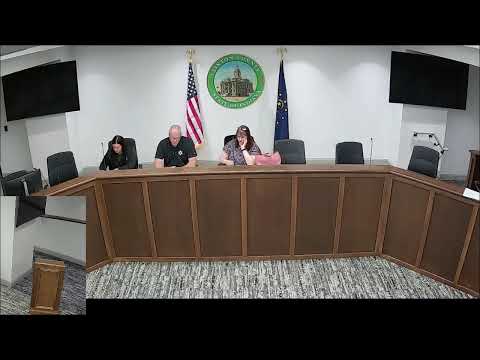
At a Clinton County community corrections meeting, the director reported 72 people on supervision (70 adults, 2 juveniles), said the office was awarded $309,000 for community corrections, noted cuts to probation funding, and proposed accepting online payments to improve collections.
The director reported the office is currently supervising 72 clients — 70 adults and 2 juveniles — and said several of those are being supervised out of county to avoid incarceration. The director said, “We have 72, which 70 were adults and 2 juveniles currently,” and listed out-of-county placements including Howard, Cass, Montgomery, Hamilton, Carroll, Boone and Tippecanoe counties.
She told members that year-to-date the office has served 221 adults and 6 juveniles through June 30 and that collections for the year through June 30 were $237,826.68. The director said the office applied for roughly $341,000 and was granted $309,000 for community corrections — the same award level as last year — while noting that probation funding had declined. The director described statewide reductions in funding and reported conversations with other program directors indicating uneven probation allocations.
The director also reported operational items: staff received updated vests (replacement cost about $3,900), a patrol vehicle was repaired using project income rather than an insurance claim, and the GPS vendor Sentinel has been bought by a competitor, with no immediate changes yet.
To improve collections, the director proposed accepting online payments via pay.gov, saying the system typically takes about three days to remit funds and charges a roughly 3% fee to the payer. "It seems very easy," she said of the process, adding that online payments could make it easier for out-of-area payers to remit transfer fees.
The meeting concluded with procedural items and scheduling follow-up; the director said she would circulate the next meeting date when available.