Get Full Government Meeting Transcripts, Videos, & Alerts Forever!
Get email alerts on the Water Infrastructure topic
No spam. Unsubscribe anytime.
Liberty hears plan for regional water plant using ceramic membranes; engineers, lawyer outline $90M financing and 50-year purchase agreement
Summary
Engineers told Liberty council members about a proposed regional water treatment plant that would use ceramic membrane filtration (selected after a March–June 2023 pilot), require roughly $90 million in construction financing, and operate under a 50-year purchase agreement that obligates participants to buy water once the plant is online.
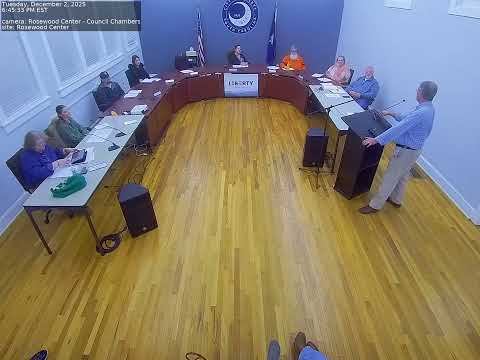
At a Liberty work session, local officials and project engineers detailed a plan for a regional water treatment plant that would use ceramic membrane filtration, rely on a mix of grants and borrowings toward a roughly $90 million construction loan and bind participating governments to buy water under a long-term agreement.
The project team presented maps of existing mains and the proposed plant and storage tank locations, summarized a March–June 2023 pilot that compared two ceramic membrane technologies and described a financing plan that includes $10 million in state support, $11.5 million in interim borrowing and an intended $90 million long-term USDA-backed loan.
Why it matters: the proposal would shift production and treatment to a regional entity and, under the contract described by the project’s public finance adviser, require participants to purchase their water from the regional plant for an extended period. Presenters said that control of water resources is central to local economic development and reliability; at the same time, early customer rates are higher until the system grows and spreads capital costs.
Amy Hopkins of GMC, who presented pilot results, said, “So we conducted a pilot study in March through June 2023,” and reviewed the technical findings: two ceramic membrane options were tested (Aqua Aerobic and Ovivo), Ovivo met U.S. manufacturing requirements and was selected, and membranes showed roughly 95–98% recovery, which the team said should reduce long‑term operating waste and costs.
The lead engineer described the proposed layout: existing 24‑inch transmission mains would feed a new treatment plant west of Liberty and a storage tank near the intersection of Terrebonne Crossing Road, Mountain View Road and South Carolina 183. The engineers said the treatment system will use chemical coagulants (aluminum chloride and alum), pH adjustment (caustic) and periodic clean‑in‑place chemicals (oxalic acid, sodium hypochlorite and citric acid).
On cost and customer impact, the team showed straight‑line comparisons and startup scenarios. A figure labeled in presentation materials compared a straight‑line blended cost of about $2.36 per 1,000 gallons with projected startup unit costs shown as high as $4.41 per 1,000 gallons that decline over time as more customers connect. Project staff gave an example that a household using about 4,000 gallons per month could see an $8–$10 increase in monthly charges during early operations compared with current rates (presenters said current comparable rates are about $2.08 per 1,000 gallons).
Gary, a public finance lawyer advising the project, explained the legal and financing structure, describing statutory authority for regional joint projects and a contract framework that the participants adopted. He summarized the payment components he said are spelled out in the agreement: a capital (debt service) charge, an O&M charge and a system depreciation component. “So y’all’s obligations under the agreement are to purchase your water, and you have to pay a rate that is calculated in section 3 0 2 of the contract,” Gary said. He added that the current drafting allows initial capital interest to be capitalized so that no debt service should be due until the plant is operational; the long‑term financing is expected to roll interim borrowing into a single construction loan.
Gary and other presenters said borrowing already executed — roughly $11.5 million — will be rolled into the larger $90 million financing, which the team said is sized to include construction, initial real estate acquisitions and project match requirements tied to grant awards. They said federal and state grants (one referenced $10 million from the state and a $1.5 million RIA grant for transmission work) helped justify moving parts of the project forward before every permit was complete.
Council members asked about Liberty’s obligations beyond buying water. The adviser repeated that the agreement requires participants to buy water when the plant is online and that emergency interconnections are encouraged so a participant can buy from another source if the plant is offline. He also noted the contract’s 50‑year timeframe discussed at the session (the adviser said the contract period began in 2023 and references a deadline of 06/30/2071).
Local officials and speakers framed the project around control and economic opportunity. Project supporters argued local control would allow faster responses to prospects and protect resources; a longtime local official urged the council to “Keep control of your water. Please.” The presenters emphasized the system’s regional scale and said the plant is intended to lower per‑unit costs over time as participation grows.
Next steps the presenters identified included finalizing permits, completing USDA conditions, finalizing long‑term financing and, once financing and permits are in place, a roughly two‑year construction window. No formal vote or commitment was recorded at the work session.
The materials and staff contacts were offered to council members for follow‑up and the work session closed with an invitation to ask additional questions at subsequent meetings.