Get Full Government Meeting Transcripts, Videos, & Alerts Forever!
Get email alerts on the Conflict Related Sexual Violence topic
No spam. Unsubscribe anytime.
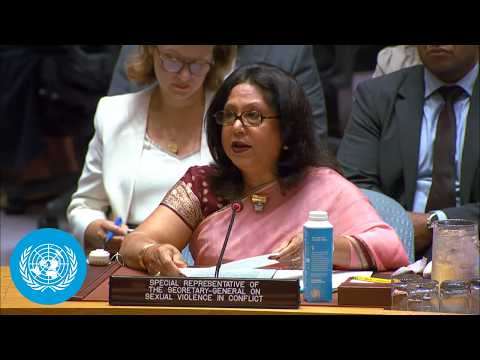
Agency official urges Security Council to act after UN verifies 9,788 cases of conflict-related sexual violence
Summary
An agency official told the Security Council the secretary-general's report verified 9,788 cases of conflict-related sexual violence in 2025, highlighted DRC progress under a roadmap, and urged targeted sanctions, expanded women protection advisers and sustained funding for survivor services.
An agency official addressing the United Nations Security Council on the secretary-general's annual report on conflict-related sexual violence said the report documents 9,788 UN-verified cases in 2025 and called on the Council and member states to turn documentation into accountability.
The presenter said the Democratic Republic of the Congo (DRC) shows that progress is possible through "political engagement, national ownership, and international cooperation," noting that 35 arms-bearers were convicted last year and reparations were paid to survivors. The speaker said a downward trend in cases attributed to the Congolese National Police over five years means delisting of the National Police "will be considered in the next reporting cycle in light of sustained progress in implementing commitments."
The report, the speaker said, covers 21 situations of concern and records the highest number of UN-verified cases in the Central African Republic, the DRC, Colombia, Haiti and Sudan. The presenter warned the figures understate the true scope because verification is limited by access constraints and stigma: "for every case that reaches a clinic, 10 to 20 go unreported and unaddressed," the speaker said.
Highlighting victims' profiles, the official said women and girls account for roughly 90% of recorded victims and that nearly 3,000 verified cases were committed against children, a 37% increase from the prior year. The speaker described survivors' experience of blocked access to justice, forced settlements in customary systems, and the use of sexual violence to consolidate territorial control and extract revenue through extortion.
To close protection and accountability gaps, the speaker outlined three core recommendations: sustain the integrated architecture that includes women protection advisers and accelerate their deployment; increase investment in multisectoral services for survivors through the CRSB multipartner trust fund; and impose real consequences on those who commit or condone these crimes through justice, oversight and vetting. "We must translate zero tolerance into real consequences," the presenter said.
The speaker also urged use of targeted sanctions, noting the report's annex lists 77 parties (62 non-state actors) and that more than 65% are persistent perpetrators who have remained on the list for five or more years. New listings this cycle include non-state actors in the DRC and Haiti and two state actors in Israel and the Russian Federation; the secretary-general formally communicated measures required of those state parties on 08/11/2025, the speaker said.
The agency official closed by urging sustained political resolve and resources, citing the UN Action network's field work across roughly 70 projects in 20 conflicts and reporting that 170 national action plans and 13 regional plans on women, peace and security now cover more than two billion women and girls worldwide. The speaker pledged the mandate would continue its work to strengthen prevention, response and accountability.
The Security Council heard the presentation; no formal vote or Council decision is recorded in the transcript portion provided.