Get Full Government Meeting Transcripts, Videos, & Alerts Forever!
Get email alerts on the Transportation topic
No spam. Unsubscribe anytime.
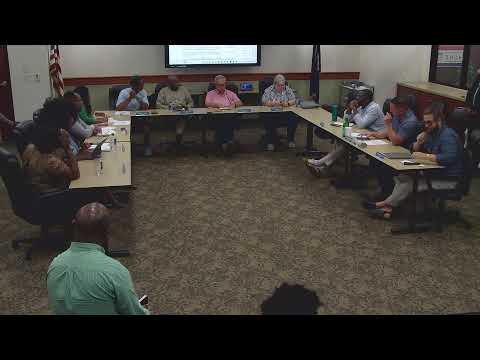
Mayor Burgess urges residents to support Transportation Sales Tax, outlines regional priorities
Summary
Mayor Burgess told the council the Transportation Sales Tax vote is scheduled for Nov. 3 and urged councilmembers to encourage turnout; he highlighted priorities including rapid transit, bike paths and sound walls and argued regional coordination will affect which neighborhoods receive funding.
Mayor Burgess urged City of North Charleston councilmembers on June 18 to mobilize constituents ahead of the Transportation Sales Tax (TST) ballot, which he said will be held Nov. 3. He described the TST as a regional pool of roughly $4.2 billion (as stated in the meeting) that will be divided among jurisdictions and said strong local turnout is needed to secure project allocations for North Charleston.
"Get out and vote," Mayor Burgess told the council, emphasizing connectivity projects such as a rapid transit corridor (LCRT), bike paths to the North Bridge and sound barriers along the I-26 corridor. He said funding decisions will be influenced by regional submissions and voter turnout across neighboring counties and stressed that areas left off local lists might still benefit from system-wide improvements.
Burgess suggested councilmembers use slide materials provided by the project presenter and civic-club meetings to explain what North Charleston seeks from the regional program. He framed the ask as seeking the city’s fair share: "But anytime you see North Charleston, we'll get it to you," he said, urging organized outreach and constituency education.
The mayor also noted trade-offs: not every district will receive every improvement, and some projects will be prioritized based on regional negotiations and funding limits. Councilmembers discussed coordination with neighboring counties and how uneven approvals in adjacent jurisdictions could create traffic bottlenecks if widening or connectivity projects were built only on one side of a boundary.
Next steps noted in the meeting included distributing explanatory slides to council members and neighborhood presidents and continuing outreach in the months before the November vote.