Get Full Government Meeting Transcripts, Videos, & Alerts Forever!
Get email alerts on the Food Insecurity topic
No spam. Unsubscribe anytime.
Local justice ministry asks North Charleston to help seed countywide food council
Summary
Members of the Charleston Area Justice Ministry told the council they have buy‑in from food banks and nonprofits and asked North Charleston to contribute $20,000 now for facilitator costs and to set aside $200,000 in the FY27 budget for council recommendations, with programmatic spending subject to future council approval.
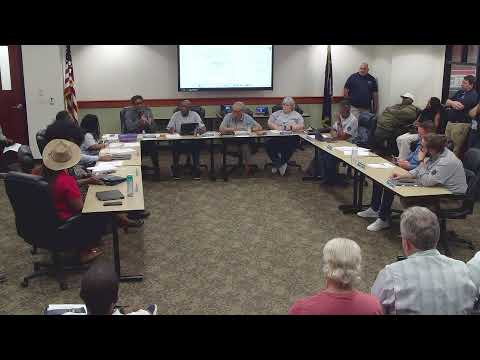
Julia Eichelberger, a member of the Charleston Area Justice Ministry, and Judge Arthur McFarland told North Charleston council members on May 21 that the group has researched regional food‑security efforts and is proposing a Charleston County food council to coordinate distribution, recommend policy changes and pursue joint funding.
"In other communities, there are food councils ... that get them to work together to assess the big picture problem, to align efforts, and then recommend policy and system changes," Eichelberger said. The presenters said the council would include food banks, nonprofits, faith groups and local government representatives.
McFarland detailed the ministry’s funding request: "The 1st 1 is a $20,000 upfront amount from each body, to hire a facilitator ..." He said the request is that North Charleston and other jurisdictions each provide $20,000 toward facilitator fees (a total of about $60,000 to hire a professional to convene partners) and that each jurisdiction reserve $200,000 in its FY27 budget to support proposals the council later develops. "Now this is not going to be money that you would just give," he said, adding that funds would be released only after the council submits and the jurisdictions approve a plan.
Council members pressed presenters on whether stakeholders had already been convened and how much of the requested sums would go directly to feeding people versus organizational costs. Rainique Sais, CAJM lead organizer, said the group had met individual providers and gathered data (including Trident United Way ALICE figures) but that the organizations are capacity‑constrained and recommended hiring an outside facilitator to assemble a coordinated plan.
Several members said they wanted clearer metrics and evidence of stakeholder commitments before approving funds. One council member said they needed "true action items" and data from the groups rather than "hope"; another suggested CAJM regroup, address the questions raised tonight and return with a revised proposal. McFarland said the facilitator’s deliverables would include a charter, an engagement plan, a year‑one action plan and a funding strategy and that the council would determine whether funds ultimately supplement operations or purchase additional food.
Why it matters: Council members voiced support for regional coordination but sought more specifics on governance, measurable goals and evidence of commitment from organizations named on CAJM’s list. If funded, the proposed council would aim to align providers across Charleston County and create a centralized mechanism for pursuing grants and larger private funding.
What happens next: Council members asked CAJM to reconvene, answer the questions raised and return with a clearer model and data. Any municipal contributions or budget set‑asides would be subject to formal appropriation and contingent on the council’s plan.
Attributions: Quotes attributed to Julia Eichelberger (member, Charleston Area Justice Ministry), Judge Arthur McFarland (introduced as judge and ministry steering‑committee member) and Rainique Sais (lead organizer, CAJM).