Get Full Government Meeting Transcripts, Videos, & Alerts Forever!
Get email alerts on the Economic Development Overlay topic
No spam. Unsubscribe anytime.
San Clemente planning commissioners press staff for more data, caution on hotel‑focused overlay
Summary
Planning commissioners reviewed a staff report proposing an economic development overlay and eight incentive options to attract hotels and visitor‑serving uses along El Camino Real but urged more property‑level data, warned against broad by‑right approvals and emphasized protecting San Clemente’s character.
San Clemente Planning Commission members spent the bulk of their June 17 meeting pressing staff for finer data and narrower options after a presentation on an economic development overlay intended to incentivize hotels and other visitor‑serving uses along El Camino Real.
"This is options for amendments to development standards to incentivize hotels and other economic development," said Lexi, a planning consultant, as she opened a staff presentation tracing the initiative from council direction in 2024–25 through a March 2026 strategic implementation plan. Sarah, the consultant who followed, summarized how development standards — general plan policies, zoning, overlays and specific plans — shape time, expense and uncertainty for developers.
"Time, approval processes can affect developers; the longer it takes a development to get off the ground ... the more unlikely it's gonna get built," Sarah said, explaining why staff focused on streamlining and targeted incentives.
Staff described market work using state TOT figures and Placer AI trip data, reporting roughly $3,300,000 in transient occupancy tax receipts for 2024 and an internal estimate of about 1,200,000 hotel nights in the study period. The presentation ran through eight options, including making hotels a permitted use in additional districts, creating an economic development overlay for gateway areas, allowing modest height or FAR increases in targeted zones, removing an older per‑lot hotel room cap, easing alternative parking approaches, prioritizing Local Coastal Program (LCP) certification and an in‑lieu fee for lower‑cost overnight accommodations, extending entitlement carryovers, and exploring TOT revenue‑sharing with luxury operators.
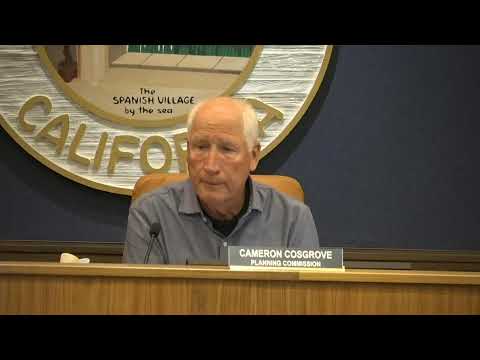
Public speakers said the report underemphasized community concern about scale and character. "We are the Spanish village by the sea," Amanda Quintanilla told commissioners, urging officials not to turn San Clemente into another larger coastal city. Robert Beaulieu called San Clemente "a surf town" and urged the commission to prioritize modest, locally appropriate economic development and rehabilitation of El Camino Real storefronts rather than seeking large hotels that could displace existing small businesses.
Commissioners backed the idea of pursuing economic opportunity on El Camino Real but repeatedly asked staff for more granular evidence before advancing incentives that would limit discretionary review. "Before we offer major incentives like extra height, 100% lot coverage, reduced parking requirements, or sharing up to 50% of the TOT revenue with luxury operators, we need better data," Commissioner Freeman said, reading from a prepared statement that urged a property‑level inventory (room counts, age, ADR, occupancy and performance), traffic/parking modeling and targeted gateway master plans with renderings.
Other commissioners questioned specific statistics in the report and the small sample size of public outreach cited by staff. Several recommended piloting design‑driven, localized changes in one or two focus areas rather than broad by‑right approvals across multiple zoning districts. Commissioners also urged staff to prioritize LCP work to speed coastal approvals and to coordinate more actively with economic development staff to attract compatible projects and reduce construction friction for already‑approved hotels that cite financing delays.
Staff said the overlay concept is meant to be additive to existing general plan focus‑area policies and architectural overlays, not to erase them, and welcomed the commissioners’ direction to refine scope and supply additional analysis. Zach, a city staffer, told commissioners the intent is to return with a revised report reflecting their feedback.
Votes at a glance - Approved minutes for the June 3 meeting (motion by Commissioner Kemp; second by Commissioner McCann). One commissioner abstained because they were not present at the June 3 meeting. - Continued public hearing for Zebra House patio (project 26079, 1001 S. El Camino Real) to July 15, 2026 (motion carried unanimously). - Adjourned to an adjourned meeting scheduled for July 15, 2026, at 5:00 p.m. (motion carried).
What happens next Staff will return a revised report that narrows options and supplies the property‑level and infrastructure analyses commissioners requested; the public hearing on the Zebra House patio will be heard at the July 15 adjourned meeting.