Get Full Government Meeting Transcripts, Videos, & Alerts Forever!
Get email alerts on the Environment Water topic
No spam. Unsubscribe anytime.
Residents urge pause on rural development as Alamance County moves into "exceptional drought"; county attorney warns moratorium may be limited
Summary
Multiple residents urged commissioners to pause large rural subdivisions that would rely on private wells after the county entered an "exceptional drought" designation; County Attorney Rick Stevens told the board that a moratorium aimed at regulating residential growth likely exceeds county authority and that permitting and vested rights limit the county's options.
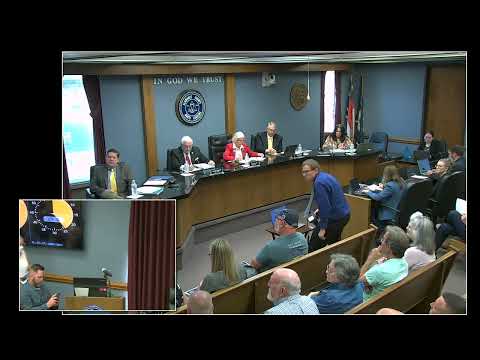
Residents from across Alamance County used the public comment period to press the Board of Commissioners to pause proposed large developments that would rely on private wells, citing immediate well failures, low reservoirs, and agricultural impacts tied to an "exceptional drought" designation.
"Please stop all development in these rural areas that require well water for a minimum of 1 year to help mitigate the devastating effects that they will have on our groundwater and existing wells," said Debbie Schroeder during public comment, asking the board to consider an emergency session or other urgent action.
Laura Streffel, who said the county is at the epicenter of drought conditions east of the Mississippi according to the U.S. Drought Monitor, told the board the drought "could devastate the already extremely strained water supply" for areas slated for proposed development and urged the commissioners to pause major subdivision approvals in unincorporated areas without municipal water.
County Attorney Rick Stevens responded to questions about a possible moratorium. "As a matter of law, we can't institute a moratorium to regulate residential growth," Stevens said, adding that moratoria are a temporary tool the government can use only where it has a way to address the problems caused by the development. He noted that well and septic permits are issued under state rules by the health department and that applicants who have already expended money and submitted permits may have vested rights under the law.
Several residents described local impacts: Chris Ashley urged the board to consider how an aging population relies on timely EMS responses as well as water access; Landreth Freeman raised concerns about septic systems and emerging contaminants as groundwater levels fall; and other speakers called for prioritizing investment in schools, libraries and emergency services rather than cutting essential services to avoid tax increases.
Commissioners thanked residents for their input and asked staff to explore what actions are available. One commissioner asked the county manager to take special attention to drought maps and to identify potential steps to raise awareness or reduce risks to public health and safety. The County Attorney cautioned the board about legal constraints and the challenge of imposing a moratorium that would be effective and defensible.
Ending: Commissioners acknowledged the urgency and asked staff for follow-up analysis; the attorney and manager said any legally viable steps or public-health measures would be brought back to the board for consideration.