Get Full Government Meeting Transcripts, Videos, & Alerts Forever!
Get email alerts on the Veterans Healthcare topic
No spam. Unsubscribe anytime.
Michigan House creates three-year hyperbaric oxygen therapy pilot for veterans
Summary
The Michigan House on June 17 passed two linked bills to establish a three-year hyperbaric oxygen therapy pilot and an associated fund to provide treatment to eligible veterans; an amendment was adopted and both measures were given immediate effect.
The Michigan House on June 17 approved a pair of bills intended to expand treatment options for veterans by creating a three-year hyperbaric oxygen therapy pilot program and an associated fund.
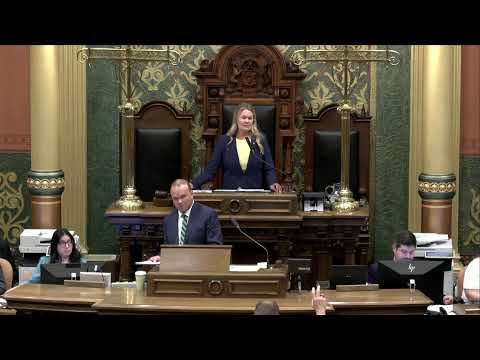
Representative Schmaltz, the bill sponsor, said the package would give eligible veterans access to hyperbaric oxygen therapy under medical oversight and allow the state to evaluate outcomes before committing to a long-term program. "These bills are all about helping our veterans," Schmaltz said, adding that the pilot is "focused, limited, and responsible" and will require treatment from qualified providers.
On third reading, Representative Brock offered Amendment 1 to House Bill 5456; the amendment was adopted. The House then passed House Bill 5456 by roll-call vote (65 ayes, 42 nays). House Bill 5457, to create the fund needed to administer the program, was considered on third reading with no amendments and passed on the same tally (65 ayes, 42 nays). The majority floor leader then moved for immediate effect on both measures, and the House ordered immediate effect.
The bills as debated include provisions to limit the pilot’s scope to three years, require medical oversight, and direct the state to collect outcome data as part of the evaluation period. Schmaltz said the measures were modeled in part on programs in 13 other states and framed the bills as an opportunity for Michigan veterans to access treatment without leaving the state.
The legislation will now proceed under the state’s implementation processes for newly effective laws; the House ordered immediate effect, which typically means the measures take effect upon the governor’s signature or at a time specified in the enacted bill.