Get Full Government Meeting Transcripts, Videos, & Alerts Forever!
Get email alerts on the Manufacturing Support Programs topic
No spam. Unsubscribe anytime.
University of Louisville’s MEP tells Kentucky committee it produced $689M in client impacts over two years; seeks sustained support
Summary
Presenters from the University of Louisville briefed the committee on the Kentucky Manufacturing Extension Partnership’s statewide services, reporting $689 million in customer-reported impacts over two years, a $1.3 million NIST grant and recent state match that was not renewed.
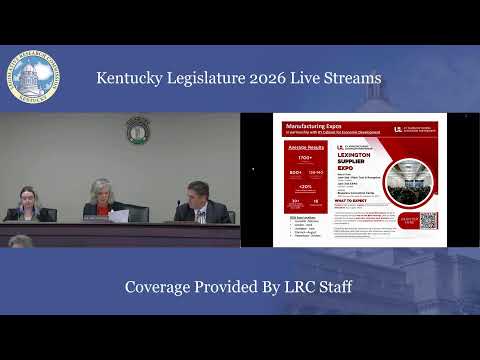
Will Metcalfe, associate vice president for research and innovation at the University of Louisville, told the House committee that the Kentucky Manufacturing Extension Partnership (MEP) helps small and mid‑sized manufacturers in four service areas: leadership and culture, growth and innovation, operational efficiency and automation technologies. "Manufacturing is the largest single contributor to the state's gross domestic product, at about $36,000,000,000 a year," Metcalfe said, and MEP serves manufacturers in nearly all 120 counties across the Commonwealth.
Metcalfe said MEP receives a base federal grant from the National Institute of Standards and Technology (NIST) of $1,300,000; in the last state budget cycle the program received a $1,300,000 state match that was not renewed. He said MEP also generates service revenue forecast at roughly $1.9–2.0 million annually from billed engagements with manufacturers.
Rich Horn, president of WireCrafters in Louisville, described direct outcomes from partnering with MEP: the company doubled over five years, increased welding efficiency by 50% in a department, reduced turnover by 60% and invested roughly $180,000 in MEP services over five years. "Those things have really, really helped us out," Horn said, adding that the cost of services to WireCrafters would have been two to three times higher with traditional consulting.
Committee members questioned program costs, participation rules and whether large manufacturers contribute expertise or funding. Metcalfe and Horn said manufacturers do not pay a membership fee to be part of MEP programs and that many events, such as regional supply‑chain expos, are free to manufacturing attendees because of federal and state support; Metcalfe said a typical expo costs about $20,000 to run.
The presenters reported that a blind third‑party survey of clients produced a two‑year impact total of $689,000,000 in new sales, cost savings and investments attributed to MEP assistance. Metcalfe said the survey is third‑party and blind; committee members asked about the time period (Metcalfe said two years for the $689 million figure and a five‑year running total is also available in handouts).
Members pressed the presenters on partnerships with large manufacturers and chambers; Metcalfe said the program works closely with regional economic development partners and that large manufacturers may participate in a separate C‑suite peer group. The committee took no formal funding action during the hearing; members said they would continue to review MEP materials online and follow up at future meetings.