Get Full Government Meeting Transcripts, Videos, & Alerts Forever!
Get email alerts on the Physician Practice Review topic
No spam. Unsubscribe anytime.
Pain committee finds gaps in monitoring, requires five CME credits after review of Hot Springs physician
Summary
An advisory pain committee reviewed an independent Hot Springs physician’s prescribing records, flagged missing pain-management agreements and inconsistent urine drug screening, accepted the physician’s corrective-action plan and voted to require five CME credits on prescribing/substance-abuse to be completed within six months.
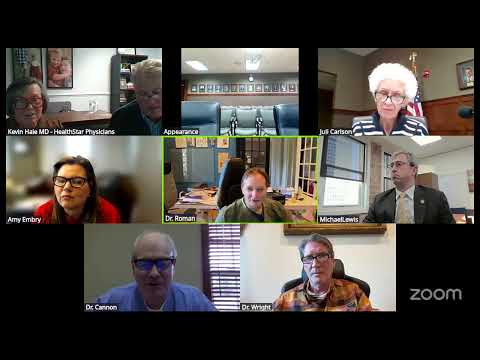
The Pain Committee, an advisory body to the medical board, reviewed prescribing and recordkeeping at an independent Hot Springs primary-care practice and identified gaps the committee said left long-term opioid prescribing insufficiently monitored.
Committee lead Dr. Ramon opened the meeting’s review of the practice’s records and told the physician under review, "there wasn't a pain management agreement, an opiate agreement, which is one of the high recommendations for patients to get any kind of long term opiates," adding that the committee found "sparse" drug testing for patients on long-term opioids and little objective rationale such as imaging or referrals in many charts.
The physician who appeared, Dr. Hale, acknowledged shortcomings in how results were captured in the electronic health record and said the clinic had submitted a corrective-action plan. "We will correct that, I can assure you," he said, describing plans to add a scribe system to better document visits and to work with the laboratory director to ensure urine drug screens are integrated into the medical record.
Committee members commended the written corrective-action plan but urged more frequent and confirmatory testing for high-risk patients. "If they're high risk, I would consider more often than every 3 to 6 months," said Dr. Tilley, who also recommended confirmatory testing rather than relying solely on rapid cups. Other members warned about the medico-legal risk of ignoring inconsistent drug screens and recommended distinguishing palliative/hospice prescribing from chronic pain management when reviewing morphine milliequivalents (MMEs).
After discussion, a committee member moved that the physician complete five CME credits focused on prescribing and substance-abuse topics, to be documented to the board; the motion was seconded and approved by voice vote. Committee members discussed a six-month completion deadline for those credits and the physician signaled he could meet that timeline.
The committee also approved its proposed 2026 meeting schedule (Thursdays in January, March, May, July, September and November) and adjourned. Staff said they would coordinate logistics with counsel and the Arkansas Department of Health before the January meeting.
What happened next: The committee accepted the clinic’s corrective-action plan in principle and added the CME requirement and a recommended six-month completion period; the committee did not record a roll-call vote tally in the transcript for the CME motion or the schedule vote.