Get Full Government Meeting Transcripts, Videos, & Alerts Forever!
Get email alerts on the Hospital Finance topic
No spam. Unsubscribe anytime.
Wyoming hospitals tell task force uncompensated care, federal underpayment drive costs
Summary
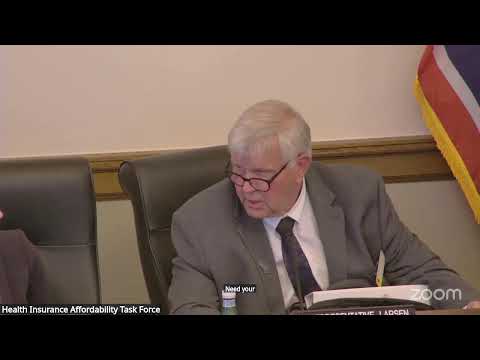
Wyoming Hospital Association told the Health Insurance Affordability Task Force on June 18 that uncompensated care has risen sharply and that federal underpayment (Medicare/Medicaid) and low patient volume in a frontier state are shifting costs onto commercial insurers and patients.
Eric Foley of the Wyoming Hospital Association told the Health Insurance Affordability Task Force that hospitals across the state face mounting financial strain and that uncompensated care has risen markedly in recent years.
Foley said Wyoming’s hospitals — a mix of 20 critical‑access facilities and larger prospective payment system hospitals — reported a 44% increase in uncompensated care from 2017 through the most recently settled cost reports (fiscal year 2024), and that the state now sees roughly $140–$145 million a year in uncompensated care. He added that hospitals’ administrative costs average about 18.3% of total costs based on 2024 Medicare cost reports.
The association’s presentation emphasized structural drivers: low patient volume in a frontier state raises per‑unit fixed costs for buildings, equipment and salaried staff; Medicare and Medicaid frequently reimburse below hospitals’ costs (presenters cited figures near $0.70–$0.73 per dollar for Medicare and roughly $0.40–$0.50 for Medicaid); and those shortfalls are often made up by commercial payers, contributing to higher commercial premiums.
Director Johansen of the Department of Health and others in the room highlighted a practical example tied to behavioral health: when psychiatric placements are unavailable, hospitals often house patients for days or weeks, driving uncompensated costs. The director also noted statutory complexities in how emergency involuntary detentions (Title 25) may allocate payment responsibility among counties, the state and insurers.
Committee members asked for clarification about whether the uncompensated‑care totals presented were gross or net of subsidies. Presenters said disproportionate‑share (DSH) payments and county mill‑levy subsidies offset only a small portion of uncompensated care in Wyoming and agreed to provide net figures and supporting cost‑report detail on request.
Hospital association witnesses and legislators discussed possible state‑level interventions: increasing Medicaid reimbursement rates, promoting critical‑access conversions where appropriate, developing group purchasing or high‑value networks for supplies and implants to capture volume discounts, and experimenting with bundled payments for high‑cost elective procedures. The association also recommended further study of prior‑authorization practices, which it said lead to denials that are frequently overturned on appeal and produce additional bad debt.
The task force did not adopt policy at the hearing but directed staff to collect more detailed data — including net uncompensated‑care numbers after subsidies, the composition of payer mix by facility, and examples of how Medicaid/Medicare shortfalls translate into cost shifting to commercial plans. Task force leadership said those data will inform future action or legislation.
The hearing moved on to other presenters after a break; the committee reserved time at future sessions for follow‑up on the data requests and potential solutions the association outlined.