Get Full Government Meeting Transcripts, Videos, & Alerts Forever!
Get email alerts on the Physician Review topic
No spam. Unsubscribe anytime.
Pain committee recommends targeted substance-misuse training after review of Dr. Murphy’s charts
Summary
The Arkansas State Medical Corps Pain Committee reviewed Dr. Murphy’s pain-management records, raised concerns about inconsistent urine drug screens and documentation legibility, and recommended targeted continuing medical education on substance misuse and stronger objective monitoring. Dr. Murphy agreed to comply.
The Arkansas State Medical Corps Pain Committee on an advisory review recommended that Dr. Murphy complete additional continuing medical education focused on substance misuse and drug-diversion prevention after committee members raised objective concerns in her patient charts.
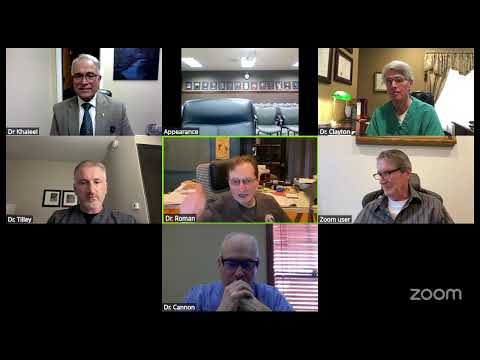
Chair Dr. Ramon, who opened the committee’s review, emphasized the panel’s advisory role to the medical board and told Dr. Murphy the committee sought to help keep her practicing while protecting patients and the community. "We're not a disciplinary committee. We're an advisory committee," Ramon said. He and other reviewers flagged two main issues: inconsistent or hard-to-find Prescription Drug Monitoring Program (PDMP) documentation in the submitted records and legibility problems in handwritten notes that made it difficult to assess clinical rationale.
Dr. Murphy told the committee that her staff prints PDMP reports before patient visits, she reviews them and signs off, and that those documents were included in the chart package sent to the committee. "Oh, yes," she said when asked whether she checks the PDMP routinely, explaining that staff "prints off the PDMP right before I see the patients" and that the reports are placed in the chart.
Committee members urged more objective monitoring. Several reviewers pointed to repeated or inconsistent urine drug screens across a sample of 10 patients as a concerning, objective signal of diversion risk. The chair illustrated the concern with a sample case he described: a 39-year-old patient with largely arthritic complaints who appeared to receive a high number of hydrocodone tablets. Dr. Murphy acknowledged one case she had terminated after a positive cocaine result and said she regretted not having acted sooner.
While members praised Dr. Murphy’s knowledge of long-standing “legacy” patients and the narrative quality of her charts, they recommended clearer, consistently accessible PDMP evidence, routine monthly urine drug screening or documented pill counts where indicated, and formal steps to make objective data easier to find. Dr. Tilly and other reviewers described Dr. Murphy’s corrective action plan as substantial and encouraged documenting policy changes, CME completion and follow-up chart review as evidence to present to the medical board.
The committee moved to recommend that Dr. Murphy complete targeted substance-misuse C M E focused on drug diversion and monitoring; members discussed 10–15 hours as a reasonable, board-directed supplement while noting Dr. Murphy had already completed about 18 CME hours related to diversion and opioid use disorder. Dr. Murphy said she will continue training and implement the committee’s recommendations. The committee recorded the recommendation for the medical board to consider.
Next steps: the committee’s recommendation will be part of the advisory record sent to the state medical board. Dr. Murphy said she will implement improved documentation practices, continue CMEs in substance-misuse topics and maintain closer objective monitoring of at-risk patients.