Get Full Government Meeting Transcripts, Videos, & Alerts Forever!
Get email alerts on the Zoning Middle Housing topic
No spam. Unsubscribe anytime.
North Branford planners set July 16 hearing on state-mandated "middle housing" changes
Summary
The North Branford Planning & Zoning Commission reviewed draft text to implement Public Act 25-1 (middle-housing) into its form-based code, debated setbacks, parking and first-floor commercial requirements, and voted to open a public hearing on July 16 for the amendments.
The North Branford Planning & Zoning Commission agreed to open a public hearing July 16 on draft zoning amendments required by Public Act 25-1 that would allow up to nine dwelling units in business zones under summary (site-plan) review.
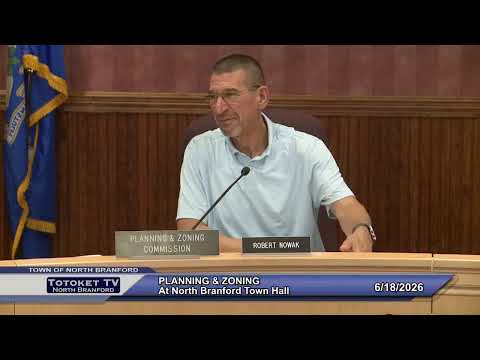
Robert Nowak, chairman of the North Branford Planning & Zoning Commission, said the commission has worked to create a form-based code but expressed concern that the state law limits local discretion. "It doesn't seem right to me, and I don't wanna be blamed for any denial of a public hearing on a site plan development that someone comes in front of this commission in North Branford and the people bring out the pitchforks on us," Nowak said.
David Perkins, the town planner, outlined the statute's key requirements: municipalities must allow developments of up to nine dwelling units on a lot by summary review (no special permit, no public hearing, no variances) if the site plan conforms to regulations. "The state statute requires that we allow by summary review developments of up to 9 units on a lot," Perkins said. He added that the statute also sets a different parking regime: "If somebody comes in with a residential development plan of less than 17 units, they don't have to show any parking."
Perkins described the draft form-based zone text the commission received: it would set specific front-setback ranges for residential structures in business zones (a proposed minimum of 10 feet and a maximum of 20 feet, compared with the town's existing 50-foot setback), add facade and material requirements to preserve town character, and include landscape, lighting and refuse-area standards. The draft also contains an "alternative compliance" section that could require one deed-restricted affordable unit in some circumstances, but Perkins said the statute does not universally mandate a deed-restricted unit for every conversion.
Commissioners pressed on limits and local levers. They noted the statute allows a developer to subdivide a large parcel into multiple lots with up to nine units each, potentially multiplying allowable units across a property. The commission discussed keeping local bulk-table protections (lot coverage and setbacks) in the new code so the town can shape development outcomes even where the statute removes a public-hearing requirement.
Perkins recommended, and commissioners agreed, to refine the proposed form-based code to reflect North Branford's local preferences on setbacks, building materials and landscaping, then advertise and open the public hearing at the July 16 meeting. "We'll set up a public hearing," Perkins said; the commission confirmed the date and asked Perkins to incorporate the changes discussed into the packet for that meeting.
The commission did not take a final vote on the zoning text at Monday's session; it set the next procedural step as a formal public hearing on July 16, when public comment will be received and the commission can consider further edits.