Get Full Government Meeting Transcripts, Videos, & Alerts Forever!
Get email alerts on the Drinking Water Contamination topic
No spam. Unsubscribe anytime.
Supervisor announces task force after SCWA detects unregulated PFAS; residents press for testing, notice and medical monitoring
Summary
East Hampton Supervisor Kathy Burke Gonzalez said a joint state‑county‑town task force will coordinate testing, new wells and source identification after Suffolk County Water Authority detected an ultra‑short‑chain PFAS (referred to as PFPRA); residents called for televised forums, a registry of affected wells and legal steps toward medical monitoring.
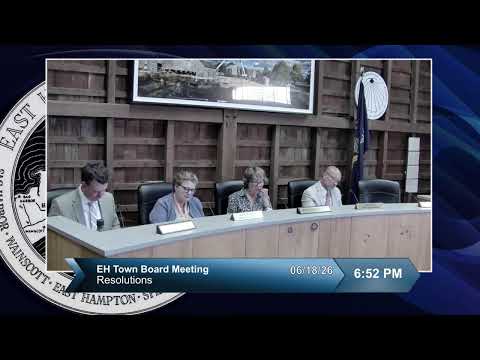
Supervisor Kathy Burke Gonzalez told the East Hampton Town Board on Thursday that town officials are treating the recent detection of an unregulated PFAS compound with urgency and have convened a joint task force with state and county agencies to protect drinking water.
"PFPRA is an unregulated contaminant that is not on the state standard testing list," the supervisor said. She said the Suffolk County Water Authority identified the compound using its own in‑house testing method and that ‘‘it is impossible to act on a contaminant that the established science of the time could not yet identify.’’
Gonzalez said the town has asked the governor’s office, the state Department of Environmental Conservation (DEC), the state Department of Health, the Suffolk County executive and county health officials to coordinate on three priorities: securing new drinking water wells for the water authority, supporting private‑well testing for homeowners, and identifying and containing the source of contamination.
Residents who said they receive water from the affected wells urged faster, clearer action. Sarah Douglas said her family was among those exposed after the 2023 East Hampton Energy Storage fire and described health concerns associated with PFAS. "No consumer filtration system has been independently verified specifically for PFPRA," Douglas told the board, and she asked the town to hold televised public forums, create a voluntary registry for affected homeowners and direct town counsel to explore legal options for funding long‑term medical monitoring for affected residents.
David Douglas said he and his family are receiving water from wells the town has placed in "reduced use" and asked officials to explain what that term means and to publish testing results for water currently being supplied. "I would like to know what 'reduced use' means because we're drinking it," he said.
Supervisor Gonzalez said the DEC is examining multiple possible sources, including a 2005 plane crash site where firefighting foam was used, and noted that village testing in 2020 had found elevated PFAS levels near the crash site. She said the town will not prejudge the DEC’s investigation and will keep working until residents have answers.
The board did not take a vote on any policy measure during the public comment period. Gonzalez said the town will continue coordinating with state and county partners and will keep residents informed as testing and the DEC investigation proceed.
The public‑comment speakers asked the board to schedule televised briefings and to invite federal or statewide technical assistance programs such as PFAS REACH to advise residents and the task force.