Get Full Government Meeting Transcripts, Videos, & Alerts Forever!
Get email alerts on the Assessment topic
No spam. Unsubscribe anytime.
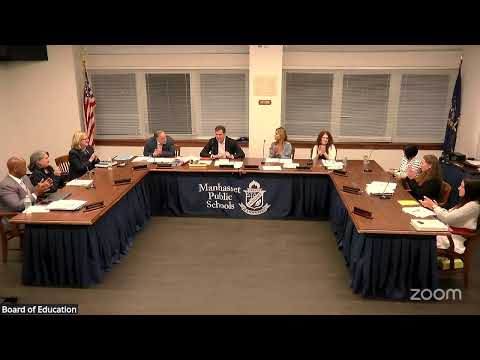
Manhasset to pilot six‑day middle‑school exam schedule and roll out updated elementary report cards
Summary
Administrators announced a middle‑school pilot to limit full‑period exams using a six‑day testing rotation and presented teacher‑led revisions to elementary report cards aligned to New York State standards; both initiatives emphasize student voice and will be evaluated with surveys and calibration work.
The Manhasset Union Free School District said it will pilot a six‑day testing rotation at the middle‑school level next year aimed at reducing the number of full‑period exams students take in a single day.
Dr. Rich Roder, speaking for the secondary shared decision‑making team, said the plan assigns subjects to days 1 through 6, designates Day 6 as a non‑testing conflict day and intends to cap full‑period exams so "there would be no more than 2 full period exams for a student in any day." The pilot will be tested against student schedule models and evaluated with end‑of‑pilot surveys of participating students.
On the elementary side, administrators presented a teacher‑led rewrite of the elementary report card to align with updated New York State learning standards, emphasize growth and readiness for learning, and use a consistent four‑point academic rating scale. Rebecca and her team described adding clearer comment banks, examples of grade‑level expectations and a public handbook. The rollout will include calibration meetings during faculty time and use of the superintendent's conference day for training.
Administrators said the changes were driven by student and teacher feedback through shared decision‑making committees and that the districts will monitor impact and collect data; the board supported a cautious pilot approach for secondary adoption and further observation before expanding to the high school.