Get Full Government Meeting Transcripts, Videos, & Alerts Forever!
Get email alerts on the Infrastructure Pavement Recycling topic
No spam. Unsubscribe anytime.
UDOT official outlines cold-in-place recycling plan for about 35 lane miles, cites savings and emissions cuts
Summary
An agency official from the Utah Department of Transportation described a cold-in-place recycling project that will reuse roughly 90% of existing pavement over about 35 lane miles in Central Utah, estimating about $5 million in savings, reduced haul-related emissions, and shorter construction windows.
An agency official from the Utah Department of Transportation described a cold-in-place recycling project meant to rejuvenate and rebuild existing pavements by reprocessing material already in place.
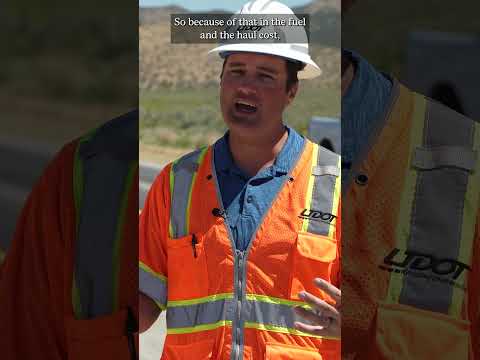
The presenter said the process involves ripping up the existing roadway, adding rejuvenating oils on site and replacing the material, with roughly “90% of the material that’s here being reused” and with the technique allowing crews to work 3 to 4 inches deep to address deeper deterioration. “We’re doing about 35 lane miles,” the official said, adding that the agency expects the approach to save “approximately about $5,000,000 in comparison to a traditional fix.”
Why it matters: the agency framed the method as both a cost and environmental efficiency. The presenter attributed lower fuel and haul needs as the reason the project “reduced greenhouse emissions by approximately 90%,” and said eliminating hauling also trims construction time by about 40%, which reduces traffic delays in work zones.
Details and constraints: the official noted the technique best suits roadways with pronounced rutting, cracking or oxidation. High‑volume corridors such as I‑15 present constraints because traffic volumes can make lane reductions impractical; by contrast, routes through Scipio and other Central Utah corridors are candidates where crews can reduce lanes and carry out the recycling work. The speaker said the project is “one of the largest” cold-in-place recycles in about 15 years for the agency.
Budget and maintenance implications: reusing existing pavement material reduces the need for new raw materials and long hauls, the presenter said, allowing the agency to stretch limited budgets and complete more lane miles. The official emphasized these benefits as central to the decision to use the technique on selected segments.
Limits of the presentation: the figures cited (about 35 lane miles, $5 million savings, roughly 90% material reuse and emissions reduction, and a 40% construction time reduction) were presented as agency estimates during the talk; the official did not provide source documents or baseline comparison metrics in the remarks. Next steps for the project, specific site lists, and timelines were not specified in the presentation.