Get Full Government Meeting Transcripts, Videos, & Alerts Forever!
Get email alerts on the Transient Waste Management topic
No spam. Unsubscribe anytime.
Curry County workshop targets transient waste: vehicle abandonment, infectious hazards and ODOT funding gaps
Summary
County officials and service providers convened a workshop to address 'transient waste' along U.S. 101. Commissioners heard that abandoned vehicles can cost thousands to remove, that contaminated vehicles pose infectious‑waste risks, and that local agencies lack funding and disposal pathways; the county will start an inventory and a DEQ petition to document the burden.
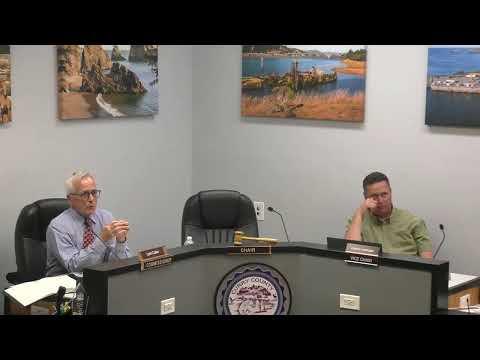
Curry County commissioners and local service providers used a 2026 workshop to spotlight three structural problems underlying transient waste along U.S. 101: costly abandoned vehicles, infectious and hazardous materials in some vehicles and camps, and a funding/authority gap for clearing state right-of-way.
Lynn (Curry County commissioner) said a January 2026 town hall crystallized community concerns about hazardous transient waste and prompted a series of follow-up workshops. "We don't have one problem. We've got three, at least three problems," Lynn said, listing (1) vehicle abandonment, (2) infectious waste hazards in some abandoned vehicles and (3) ambiguity about ODOT right-of-way authority and funding.
On vehicle abandonment, Lynn provided cost ranges: "1 abandoned SUV can cost you know $3,700 to relocate and dispose of or it could be, you know, 7,500," and if contamination (asbestos or drug‑related residues) is found the price can rise to $10,000–$25,000. Participants called this an unfunded mandate for rural counties because Portland and other metro areas receive larger appropriations for disposal and remediation. "Whatever Portland has to do, Curry County has to step up to do the same things, but we never got any money whatsoever," Lynn said.
Ken, who represented CTR/Waste Connections in county discussion, said the company can handle the majority of lower-level camp and vehicle cleanups and sometimes demolishes motorhomes after hazmat remediation, but corporate limits and trucking/towing costs constrain free assistance. He said CTR currently provides community donations and discounts up to internal limits and offers a 25% discount beyond an initial donation cap. "We will give as much as we possibly can," Ken said, but warned the company cannot subsidize all removals indefinitely.
Participants discussed practical tactics and policy levers:
- Tiered recommendations. Lynn proposed a three-tier plan: Tier 1 (near term) includes creating a simple, paper-based abandoned-vehicle inventory with GPS coordinates, vehicle type, hazard flag and date to document volume and costs; Tier 2 covers intergovernmental agreements (IGAs) with ODOT/OSP and formalized tow/incentive arrangements; Tier 3 would pursue legislative fixes and DEQ petitions to adjust state disposal requirements for rural geographies.
- Inventory as leverage. Multiple speakers urged that a documented, countywide inventory of abandoned vehicles and incidents be collected for at least a year. Lynn said the county will use that data to demonstrate an "unfunded mandate" to legislators and to support petitions to the Department of Environmental Quality (DEQ).
- Operational pathways. ODOT and county operations staff outlined current practice: camps are posted for 10 days before cleanup, dumpsters are used for collection, CTR is engaged to process trash, and an incentive-tow program can provide up to $3,000 to a tow company to retrieve and hold an RV for 30 days prior to disposal if private tows decline due to cost or safety concerns.
- Hazard concerns. The group emphasized worker and public safety risks from biological or chemical contamination inside abandoned vehicles (sharps, drug production instruments, asbestos), and noted limited local hazmat containment capacity and licensing under DEQ rules.
State Parks' South Coast District Manager Justin Hubbard said Parks relies on internal safety directives and seeks vendors capable of handling hazardous materials while balancing environmental and archaeological constraints at coastal removal sites.
Next steps announced included a county-led effort to begin a DEQ petition tailored to rural conditions, legislative outreach to shorten reclaim/retention periods that increase local storage burdens, capture baseline inventories, and continue interagency coordination. Lynn said the county would follow up with stakeholders and report progress to the group.
No formal votes were taken on policy changes during the workshop; participants focused on data collection, grant-seeking, and possible IGAs to create actionable, fundable cleanup pathways.