Get Full Government Meeting Transcripts, Videos, & Alerts Forever!
Get email alerts on the Budget topic
No spam. Unsubscribe anytime.
Council Rock board adopts $303 million budget with 3.5% tax increase after heated debate
Summary
By a 5–3 vote the Council Rock School District board approved a $303 million general‑fund budget for 2026–27 that includes a 3.5% real‑estate tax increase tied to the PA Act 1 index; board members split along fiscal‑priority lines after an extended discussion of staffing, special‑education costs and long‑term debt.
The Council Rock School District board voted 5–3 on June 24 to adopt a $303,000,000 general‑fund budget for the 2026–27 school year that includes a proposed 3.5% real‑estate tax increase recommended by the Pennsylvania Act 1 index.
The motion to adopt the final budget was moved by board member Linda Stone and seconded by board member Mister Tate. Stone said the budget preserves classroom programs and supports a five‑year staffing and compensation plan, including 14.4 full‑time equivalent positions largely dedicated to special education and a five‑year contract framework intended to stabilize planning.
"We are able to plan in the future in a much more thoughtful process," Stone said during debate, highlighting staff recruitment measures and starts in teacher pay scales. Finance director Mister Rapp told the board the budget still reflects an approximately $5 million shortfall and must be filed with the state before June 30.
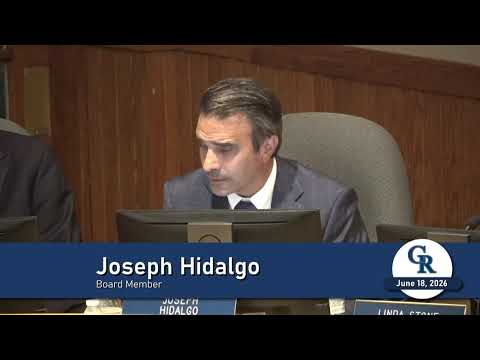
Opponents framed their no votes as fiscal prudence rather than opposition to services. Mister Hidalgo, who voted no, said he supported many items but argued the district should give administration more time to implement recent special‑education staffing and program changes before commissioning an expensive audit or increasing taxes. "I will be voting no," Hidalgo said, describing his vote as a protest intended to press for different fiscal choices.
Mister Roosevelt, also voting no, expressed concern about longer‑term external cost pressures and urged the board to begin planning for a narrower Act 1 index next year. "We have to balance the desire of constituents with a budget for the entire district," he said.
Supporters emphasized the relative restraint of the increase compared with neighboring districts and noted the budget does not increase debt service. Mister Tate said the district has been cautious in raising taxes and cited investments such as air conditioning in elementary schools and new special‑education positions. "We are adding 14.4 positions impacting the classroom," he said.
The roll call recorded these votes: Miss Khan (yes); Mister Tate (yes); Mister Hidalgo (no); Mister Roosevelt (no); Miss Oseki (yes); Miss Stone (yes); Miss Warner (no); Mister Green (yes). The motion carried 5–3.
Public comment during the meeting included residents who questioned the timing and size of the increase. Andy Casademon, an Upper Makefield resident and retired health‑care executive, urged the board to scrutinize internal spending rather than raise taxes. Akko Shverkewitz asked why the proposed 3.5% increase was being considered while enrollment is declining.
The board also discussed revenue and expense drivers earlier in the meeting: insurance renewals, a new workers' compensation carrier, grant funding for network security testing, and an estimated $5 million deficit. Finance staff said roughly 70% of the district budget pays salaries and benefits, leaving limited levers for deeper cuts without affecting staff or programs.
The board will file the final budget with the Pennsylvania Department of Education as required. Administration urged residents to use official Council Rock district channels for updates, including the district website and mobile app.