Get Full Government Meeting Transcripts, Videos, & Alerts Forever!
Get email alerts on the Special Events topic
No spam. Unsubscribe anytime.
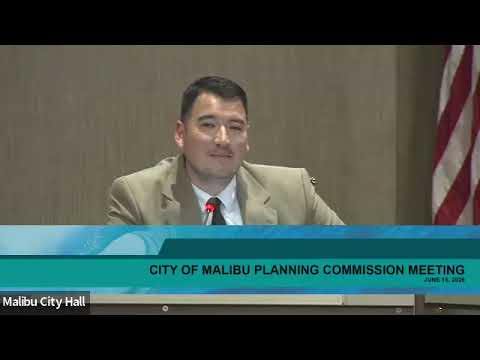
Planning commission approves Malibu Chili Cook Off with new safety conditions on alcohol and monitoring
Summary
The commission approved the annual Chili Cook Off and carnival with amendments: the applicant (Boys & Girls Club) must indemnify the city, provide a public contact number for the event, station security at each ingress/egress between alcohol‑sales and carnival areas, prohibit alcohol consumption in the carnival area, and require carnival lighting off by 11 p.m.
The Malibu Planning Commission approved the coastal development permit and temporary use permit for the annual Malibu Chili Cook Off and carnival after extensive discussion about parking, alcohol policy, security and neighborhood impacts.
Staff said the event has been processed as a coastal development permit this year and described requested changes including expanded setup/breakdown days, a private Thursday concert expected to draw up to 1,000 people, and a proposed operational change to allow beer and wine purchased in a 21+ sales area to be carried into the music and food/lounge areas (but not into the carnival). Staff also noted pending approvals from the LA County Health and Fire departments and identified the parking plan that uses multiple off-site lots as in prior years.
Event organizers from the Boys & Girls Club, represented by Molly, described the Cook Off as the nonprofit’s principal fundraiser that supports after‑school mental‑health and disaster‑relief services. Organizers said they have layered security, paid parking, and coordination with the Sheriff’s Department and that in previous years the parking plan worked without major system failures.
Commissioners pressed the organizers on several public-safety topics: how underage drinking would be prevented, how alcohol would be kept out of the carnival area, how ingress/egress between music/food areas and the carnival would be monitored, and how parking impacts on surrounding neighborhoods would be enforced. Organizers and staff committed to multiple operational measures, including wrist‑band age verification, fenced 21+ purchase areas with ID checks, roving security, and sheriff patrols inside the venue. The commission required the applicant to provide a phone number that the city will publicize on social media and the city website for complaints and on‑site contact during the event.
After negotiations the commission amended the proposed resolution and approved the permit subject to the following key conditions: replace the phrase "property owners" with "applicant" in indemnity language; no alcohol consumption inside the carnival area; security shall monitor each entrance/exit between the alcohol sales/music areas and the carnival; carnival lighting must be turned off no later than 11:00 p.m.; and the applicant must provide an on‑site representative and a phone number that city staff will post publicly for the duration of the event. Commissioners also struck or revised duplicate smoking/indemnity language to avoid internal conflict in the conditions.
What happens next: staff will finalize the resolution with amended condition wording, the applicant must secure remaining departmental approvals (fire, health), and the event moves ahead under the amended TUP/CDP terms. The commission emphasized that operational compliance and neighbor complaints will influence future permits.
Why it matters: the Cook Off is a high-attendance fundraiser that generates significant revenue for a local nonprofit but also has recurring neighborhood impacts (parking, noise, safety). The commission’s conditions aim to reduce risk by making the applicant responsible for operational controls and improving clarity about enforcement and contact procedures.