Get Full Government Meeting Transcripts, Videos, & Alerts Forever!
Get email alerts on the Parks And Recreation topic
No spam. Unsubscribe anytime.
Parks and Recreation director reviews operations, cemetery capacity and program growth
Summary
Parks and Recreation staff reported staffing levels, forestry contracting, free mulch distribution, cemetery capacity (about 300 plots remaining), campground revenue increases and plans for phase 2 of the master plan, including trail connectivity and parking improvements.
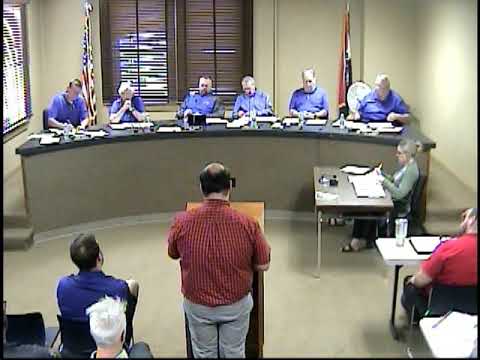
Mexico City — Parks and Recreation Director Jack presented the department's annual overview at the March 9 council meeting, detailing staffing, operations and upcoming capital priorities.
Jack described the department's mission as providing "a safe, professional, high quality, affordable leisure and recreation service to the residents of Mexico," and said staff broadly follow an internal acronym—"heart, honor, effort, attitude, respect, and teamwork." He said the department is operating with seven full‑time staff citywide, with the cemetery, forestry and animal shelter divisions reporting additional personnel and part‑time support.
On forestry, Jack said the city contracted with Hanson for limb removal and grinding into mulch; the brush yard operates year‑round with adjusted summer and winter hours set for staff safety. "You'll see mulch piles out there...it's free to pick up for the citizens that are able to come out and help themselves," he said.
On cemetery operations, the department reported 37 burials last year and roughly 300 plots remaining for sale; Jack estimated that at current rates the cemetery inventory could last about 15–20 years. The department said it purchased a dirt sifter last year to improve fill material quality.
Recreation highlights included a new dog park at Fred Brown's, trail repairs at Green Estates and Lakeview, collaborations with Arthur Hills (golf camp) and the YMCA (facility usage), and a stronger campground season with nearly $10,000 in revenue compared with a typical ~ $7,000. Jack said the department completed phase 1 of a master plan and expects phase 2 to focus on trails and connectivity.
On animal shelter metrics, the department reported a live‑outcome rate in the low 80s percent and said it had approximately 691 impounds during the fiscal year (as stated at the meeting). Jack also flagged operational challenges including the impact of minimum wage increases (projected at about $30,000 additional cost for pool staffing) and supply/cost pressures that can delay work schedules.
The director closed by listing monthly events, senior expo participation, Arbor/Earth Day education and continued coordination with public works on park parking and museum site work.