Get Full Government Meeting Transcripts, Videos, & Alerts Forever!
Get email alerts on the Retreat Planning topic
No spam. Unsubscribe anytime.
Worcester youth commission prioritizes youth engagement, mental‑health bridges and internships as retreat focus
Summary
The Worcester City youth commission met in person to set priorities for an upcoming retreat, highlighting integration with youth councils, school‑based mental‑health partnerships, internships and neighborhood safety; members also heard a hiring update for a youth violence prevention coordinator and set an August retreat date for finalization.
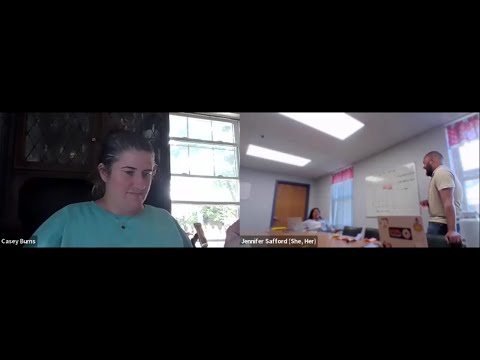
The Worcester City Youth Advisory Commission met in person and spent the session building an agenda for an upcoming strategic retreat, prioritizing closer integration with youth councils, strengthening school‑linked mental‑health resources, expanding internships and jobs and improving neighborhood safety and access to green space.
"We're going to be focusing on retreat planning," Chair Pat said at the start of the meeting, framing the work session as an opportunity to decide what the commission should prioritize. Staff member (the facilitator) led a sticky‑note activity that asked members to score proposed topics by urgency and impact on youth in order to select 3–5 retreat priorities.
Members agreed that engaging youth voices and integrating the Youth Advisory Commission (and other youth bodies) into committee work is a top priority. "It might be nice for, like, each of us to take an opportunity…to go to their meetings and just kinda be a fly on their wall," Pat said, arguing commissioner attendance at youth meetings would help the commission better hear youth perspectives.
Discussion of mental‑health services focused on improving school‑based and community bridges so students can get timely care. One participant noted existing clinicians are stretched thin and urged partnerships that would place mental‑health resources "in the building or ideally in the building" so students can access therapy during or after school. The commission debated urgency and concluded the issue requires coordination with other tables and partners even if direct authority is limited.
Members also prioritized internships and year‑round jobs as a means to give youth earlier work experience beyond summer programs. Participants described models where dedicated coordinators or school positions broker relationships with employers and suggested the commission explore replicating successful infrastructure used by individual schools or community partners.
Neighborhood safety, access to parks and programs such as Vernon Connect were placed on the agenda as items with high impact on youth, with members urging meaningful youth participation in planning for street and park improvements.
The commission received two operational updates. A staff member reported that one candidate for the city’s youth violence prevention program coordinator had been selected and was verbally committed, though start work remained contingent on a formal offer letter and HR checks: "We negotiated, accepted, verbally accepted…waiting for an offer letter," the facilitator said. Members welcomed the news but noted timing constraints for onboarding.
Recreation Worcester staff training also kicked off with strong attendance; members praised the department’s social‑media outreach, saying it raised visibility for summer programs across platforms.
For next steps, the group narrowed retreat timing to an August half‑day and asked staff to finalize the date and a venue. Chair Pat moved to adjourn at the close of the meeting; members seconded the motion and the meeting ended by voice vote.
The commission plans to use the retreat to convert prioritized topics into a year‑long work plan with benchmarks, and staff agreed to structure follow‑up implementation tasks between monthly meetings so the commission can track progress.