Get Full Government Meeting Transcripts, Videos, & Alerts Forever!
Get email alerts on the Blight topic
No spam. Unsubscribe anytime.
Councilman Bishop pitches 90‑day "Clean Blocks" pilot to tackle blight in District 2
Summary
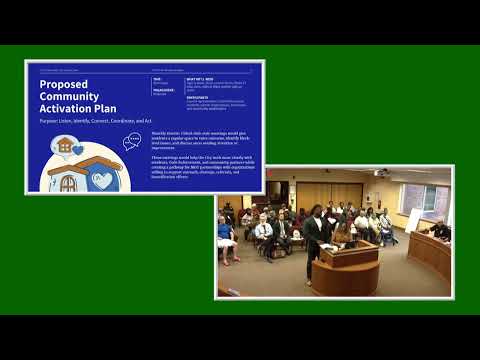
Councilman Freddie Bishop and planning commissioner AC Williams proposed a 90‑day District 2 Clean Blocks pilot to reduce visible blight through resident engagement, a two‑track compliance model and MOUs with local partners; first meeting set for next Thursday at 6 p.m.
Councilman Freddie Bishop presented a neighborhood‑centered pilot on June 15 intended to reduce visible blight in District 2 while coordinating resident support and city follow‑up.
"This initiative is not intended to replace code enforcement, but is designed to build on the city's existing code, enforcement and service systems by adding resident engagement, partner support, and a clear communication around follow‑up," Bishop said.
Planning commissioner AC Williams, who said she lives in District 2 and helped design the proposal, described a two‑track approach. Track 1 would prioritize seniors, disabled residents and low‑income owner‑occupied households with education, referrals and volunteer support. Track 2 would focus on chronic, nonresponsive properties — absentee owners, commercial properties and vacant lots — and escalate those cases to code enforcement.
Williams cited examples from other cities and data collected in the district to justify a small pilot: "In 2022, Flint recruited volunteers to maintain 971 vacant lots and removed 155 tons of debris," she said, arguing volunteer coordination can produce measurable results.
The presenters proposed using memoranda of understanding with churches, businesses and youth groups to define partner roles and help with cleanups. They distributed a flyer with common code violations and said the first block club meeting will be next Thursday at the recreation center at 6:00 p.m.
Why it matters: the pilot aims to combine resident engagement with targeted enforcement to produce visible neighborhood improvements and to create a repeatable model other districts could adopt.
Next steps: council members and staff will observe the pilot and participate in planning; the presenters asked for council feedback and partner referrals at upcoming meetings.