Get Full Government Meeting Transcripts, Videos, & Alerts Forever!
Get email alerts on the Rda Budget topic
No spam. Unsubscribe anytime.
Murray Redevelopment Agency adopts 2026–27 budget, cites limited project-ready funds
Summary
The Murray City Redevelopment Agency unanimously approved its 2026–27 budget after a public hearing in which staff outlined tax‑increment projections, targeted reimbursements to the Murray School District and small reserves for professional services on sites including the smelter and Block 1.
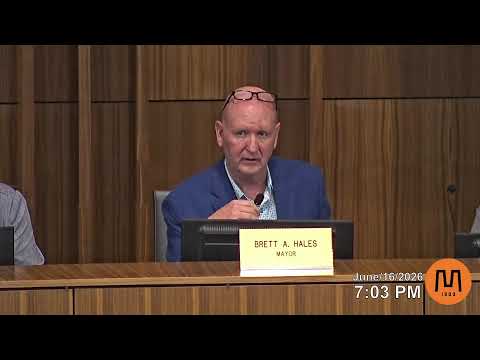
The Murray City Redevelopment Agency adopted its fiscal year 2026–27 budget at a June 16 meeting after a brief public hearing and unanimous roll-call vote.
Brenda Moore presented the plan, detailing tax‑increment revenue estimates and line items. She said Fire Clay’s tax‑increment for the upcoming year is estimated at about $2,000,000 with roughly $132,000 in interest. The Smelter site budget includes $100,000 for professional services to allow for engineering work should the agency need to evaluate or support proposed projects. Moore also noted smaller increments: East Vine Street’s increment is about $50,000 and Cherry Street is closed with no budgeted activity. She described an annual $400,000 reimbursement to the Murray School District derived from tax‑increment collections and explained that some reimbursements or private‑reimbursement payments (a noted $3,000,000 block‑1 private reimbursement) will only occur once construction activity begins.
After staff closed the public hearing with no in‑person comments, a board member moved to adopt the budget and the board voted unanimously in favor. The resolution was entered into the record and the board approved the minutes for May 19, 2026.
Staff said several project budgets remain constrained until external conditions change — notably the resolution of legacy utility easements and required agency approvals — but that modest reserves are retained to cover professional services and administrative fees. The agency scheduled follow‑up reports on specific projects at future RDA meetings.