Get Full Government Meeting Transcripts, Videos, & Alerts Forever!
Get email alerts on the County Budget topic
No spam. Unsubscribe anytime.
Alamance County board keeps property tax rate, offsets recommended increase with capital transfer and fund balance
Summary
At a budget work session the Alamance County commissioners agreed informally to hold the property tax rate at 49.4¢, offsetting a recommended 2.25¢ increase with a $2 million transfer from multiyear capital and roughly $4.1 million from fund balance while directing staff to prepare the ordinance for Monday.
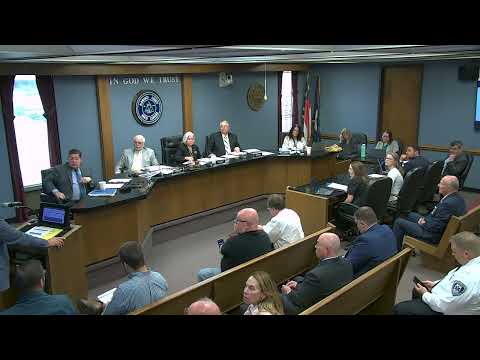
Alamance County commissioners met in a budget work session focused on FY26‑27 revenue choices and narrow budget gaps and reached informal consensus to keep the county’s property tax rate at 49.4¢ rather than adopt the manager’s recommended 2.25¢ increase.
County finance staff and commissioners worked through alternative funding options to close roughly a $6 million shortfall. Staff recommended several combinations of cuts, transfers and one‑time use of reserves; commissioners settled on moving $2 million from the multiyear capital fund back to the general fund and using the balance of the difference—about $4.1 million—from the county’s unassigned fund balance. Staff said those changes will be reflected in an ordinance to return for an official vote on Monday.
The discussion repeatedly flagged tradeoffs between recurring obligations and nonrecurring sources. County counsel and finance staff warned that relying on transfers and reserves is nonrecurring and will require renewed choices next year; staff noted the county’s projections put revised total revenue at about $239.4 million under the agreed adjustments.
Commissioners emphasized priorities for public safety and schools while urging careful scrutiny of recurring personnel and capital commitments. One commissioner suggested postponing a $150,000 compression study as an example of a nonessential item that could be delayed to free operating dollars; another proposed trimming capital outlays instead of the tax rate. Staff said they would prepare the detailed budget ordinance and the impact calculations for the board to adopt at its next meeting.
The meeting did not adopt a formal motion during the work session; staff will present the final ordinance and the line‑by‑line budget reflecting these adjustments at the upcoming meeting.