Get Full Government Meeting Transcripts, Videos, & Alerts Forever!
Get email alerts on the Time Change Hb44 topic
No spam. Unsubscribe anytime.
State Planning & Community Affairs panel advances bill to make daylight saving time permanent pending congressional approval
Summary
The State Planning & Community Affairs committee voted to give HB 44 a do-pass recommendation after Representative Cantrell presented research and supporters cited economic and health benefits; several members pressed for empirical data and stakeholder outreach before final action.
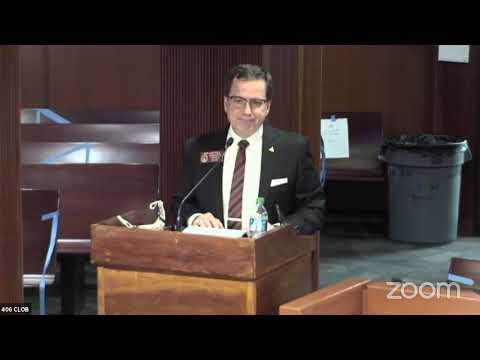
Representative Cantrell introduced HB 44, a measure to place Georgia in permanent daylight saving time if Congress grants states that authority, and the State Planning & Community Affairs committee voted to give the bill a do‑pass recommendation after more than an hour of questions and debate.
Cantrell told the committee he has been pushing to end twice‑annual clock changes for years and cited polls and published studies he said link the transitions to spikes in traffic fatalities, heart attacks and sleep disruption. "HB 44 would take Georgia to permanent daylight saving time pending congressional approval," he said, and argued the change would deliver ‘‘more sunlight in the evening, it’s good for our health’’ and help the economy by encouraging shopping and recreation in daylight hours.
The sponsor acknowledged that Georgia cannot adopt permanent daylight saving time without a federal change and described the bill as a trigger: if Congress authorizes state-level choices, Georgia would move automatically to daylight saving time under HB 44. Cantrell pointed to similar measures passed in several southeastern states and said he had discussed the issue with members of Georgia’s congressional delegation and with federal lawmakers who have proposed related legislation.
Committee members pressed the sponsor on technical, safety and logistical concerns. Representative Jackson raised questions about legacy military systems, airport scheduling and other infrastructure that may rely on coordinated timekeeping; he argued the committee needed concrete data from stakeholders before acting. Representative Maynor and others asked whether Cantrell had empirical studies, sample sizes or fiscal notes to back the claims of safety and economic benefit. Cantrell said he had relied on existing research and practice and offered to provide a list of the studies to the chair.
Some members described likely constituencies for and against the change. Representatives said the Georgia Farm Bureau and a teachers’ organization had voiced support, while the most frequently mentioned objection involved child safety at morning bus stops. Cantrell told the committee that he had not encountered organized, consistent opposition from major industry groups and that any initial IT costs would be negligible once systems were set to a final time.
At the end of the meeting, the committee chair called for a motion. A member moved that the committee give HB 44 a do‑pass recommendation; the motion was seconded and the chair declared "the ayes have it" after a voice vote in which several members recorded nays. Cantrell told the committee he would provide the research and factual sources he relied upon if members wished to review them.
The committee’s recommendation sends HB 44 forward in the legislative process; because the bill’s effect depends on a congressional change, supporters framed the measure as both a policy preference and a signal to federal lawmakers. Members who requested more data said they expect to review the sponsor’s sources and stakeholder responses as the bill moves through the chambers.