Get Full Government Meeting Transcripts, Videos, & Alerts Forever!
Get email alerts on the Humanitarian Ukraine topic
No spam. Unsubscribe anytime.
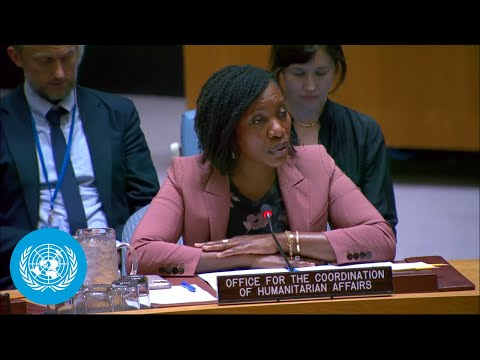
Presenter urges protection of civilians in Ukraine, cites damage to cultural site and calls for flexible funding
Summary
At a United Nations council briefing, the presenter said civilian harm around Kyiv and Kharkiv has intensified after June 15 strikes that damaged homes, infrastructure and a major monastery, urged strict compliance with international humanitarian law and requested timely, flexible funding for relief operations.
Presenter addressed the council in a briefing on the humanitarian situation in Ukraine, saying civilian harm and suffering have deepened over the past two weeks after strikes on Kyiv and Kharkiv damaged homes and critical infrastructure and left well over 100,000 households without power.
The presenter said the Kyiv Pechersk Lavra Monastery, a UNESCO World Heritage Site, was struck and damaged, and stressed that such cultural property "carries centuries of cultural heritage, history, identity that must be protected." He also cited United Nations human rights monitoring findings of repeated strikes on ambulances, rescue teams and aid workers.
The briefing highlighted the growing danger posed by short-range, first-person-view drones. "They are equipped with cameras that let the operators see exactly what they are striking," the presenter said, and added that the monitoring mission recorded more civilian casualties from short-range drones in May than in any month since February 2022.
Presenter described instances in Kharkiv where rescuers responding to earlier strikes were hit by subsequent strikes and warned that evacuation teams report being tracked by drones as they try to reach people near the front line, putting civilians and humanitarians at risk.
On the humanitarian response, the presenter said Humanae and Partners supported first responders in Kyiv and Kharkiv after the June 15 strikes with emergency repairs and psychosocial support, and that response activity has continued across multiple regions where access allows.
The presenter made two specific requests to the council. First, he urged members to use their influence to ensure all parties comply with international humanitarian law, including the rules of distinction, proportionality and precautions, and to protect civilians, civilian objects and cultural property. Second, he called for timely, flexible funding to allow humanitarian actors to stay and deliver assistance as the operating environment becomes more dangerous.
"Every attack on an ambulance, every attack on an aid convoy deprives anyone who would otherwise have been helped," the presenter said, underscoring the briefing's humanitarian focus.
The presenter closed by emphasizing the stakes: he said the council's choices "can mean the difference between aid delivered or aid denied, and the choices made here can mean life saved or lives lost." The briefing concluded with no formal vote or decision recorded in the transcript.